
 EN
 DE
 RU
 FR
 PT
 ES
 IT
 JA
Aplarack / vertical metal storage rack
vertical metal storage rack for high-value sheet handling, surface-safe sorting, and lift-only retrieval in pump, metal, glass, and acrylic workflows.
When a factory handles stainless steel, acrylic, coated sheet, or special alloy panels for high-value pump components, the storage problem is no longer about volume alone. The real issue is surface damage. A single scratch, edge rub, or bent corner can turn usable stock into rework, polishing, or scrap. That is why a vertical metal storage rack matters: it changes the handling method before the first mark reaches the sheet.
Aplarack is built for that exact workflow. It keeps each batch in an isolated vertical bay, so operators do not drag one panel across another. The sheet is lifted out, not pulled through a pile. That simple shift removes the main source of friction loss, shortens picking time, and gives the production team a cleaner way to sort material by grade, thickness, or surface finish.
Why flat stacking keeps damaging high-value sheet stock
Flat stacking looks efficient until the jobs get mixed. Once the rack holds different materials in one pile, every search becomes a manual shuffle. Operators lift the top sheets, slide the bottom sheet out, then push everything back into place. On polished stainless, acrylic, or coated alloy stock, that sequence creates contact rub at the edges and broad scuffing on the face. In a pump workshop, the risk is even higher because the material cost is already high and the finish standard is stricter than ordinary fabrication.
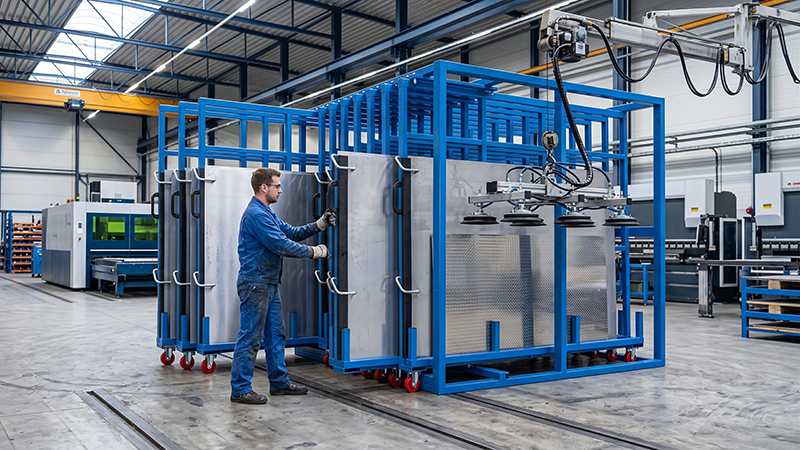
The workshop photo shows the opposite approach: separate roll-out drawers, a rigid Q235 steel frame, and casters that let each batch move as one controlled unit. Instead of dragging sheets on a floor or across a stacked pile, the operator works inside a defined bay. That is the difference between uncontrolled abrasion and predictable handling.
Why Aplarack fits pump-material storage better than a generic rack
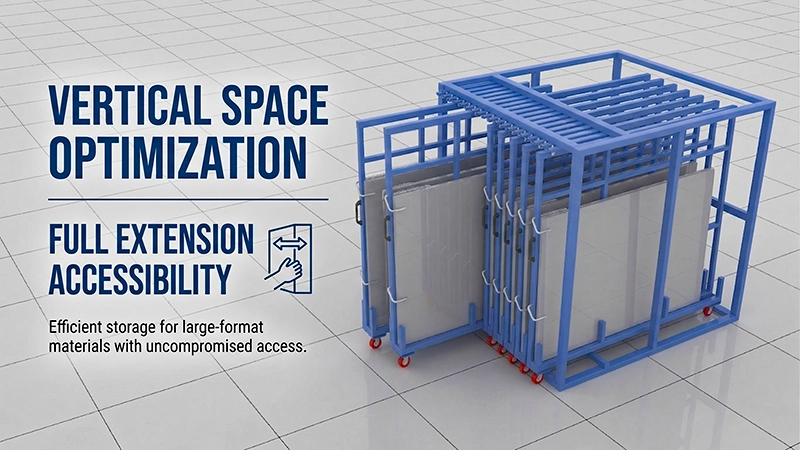
Aplarack is not a loose-purpose trolley. It is a drawer-type vertical sheet rack designed around sheet classification and lift-assisted retrieval. The rack uses independent vertical compartments, so each batch can be assigned to one drawer and one material family. The 3°-4° inclination and anti-tip structure help keep the sheet seated, while the top stays fully open for crane or hoist access. That is important when the workpiece is heavy, fragile, or too valuable to be rehandled by hand.
For production teams, the benefit is practical. A typical configuration can be tailored to sheet width, load demand, drawer count, and site movement method. Depending on the project, the rack can use heavy-duty polyurethane casters or a V-wheel and angle-rail arrangement. That means the same product family can serve a compact polishing bay, a laser-cutting buffer zone, or a receiving area where material must stay sorted but still move with the job flow.
In other words, the fit is not just structural. It is procedural. The rack supports one-batch-at-a-time picking, keeps the surface isolated from neighboring sheets, and preserves a vertical lifting path so the operator does not need to slide material across a stack. That is how surface loss drops in real use.
What the structure proves on the factory floor
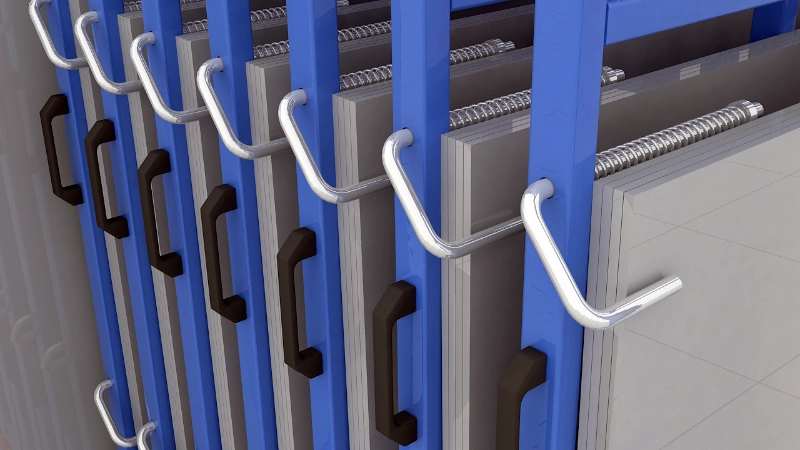
The 3D render shows the system in its cleanest state: Q235 steel frame, open-top access, multiple drawers, and a heavy-duty base. The close-up image then confirms the details that matter on site: spring-loaded safety pins, U-shaped handles, and a lock mechanism that helps prevent tipping during extraction. These are not decorative parts. They are the difference between a rack that only looks organized and a rack that supports repeated daily use.
The bottom structure also matters. Heavy-duty casters and welded base details carry the moving load, while the drawer guide path keeps the sheet aligned during pull-out. That makes the rack suitable for factories that want a controlled, repeatable storage method instead of a floor-pile habit. For a precision department, the result is fewer surface defects, less rework, and a clearer inventory picture.
What to confirm before you specify the rack
- Confirm whether the sheet family is stainless steel, acrylic, coated metal, or special alloy, then assign separate drawers so different surfaces never rub together.
- Confirm the sheet weight and board size, because Aplarack can be configured around drawer count, bay width, and load level instead of forcing one fixed size.
- Confirm the handling method on site: if the shop uses hoists or cranes, keep the top open so every pickup is a vertical lift rather than a drag-out movement.
- Confirm floor condition and movement needs, because the rack can be built with casters or rail-supported movement to match the actual workshop layout.