
 EN
 DE
 RU
 FR
 PT
 ES
 IT
 JA
Aplarack · EHS-safe sheet handling
Vertical metal plate storage racks replace blind floor stacking with guided drawer access, so teams can meet tighter EHS expectations without forcing employees to pry, lift, or hunt for heavy sheets.
When EHS or ESG audits tighten, the real risk is not just the rack itself. It is the routine: stacked sheets get buried, operators start blind rummaging, hands go under load, and forklifts keep entering narrow aisles.
Aplarack vertical metal plate storage racks change that workflow. Horizontal drawer travel stays on a rail, vertical lifting stays with the crane, and direct hand contact with heavy plates drops to a minimum.
Why the old sheet stack creates EHS pressure
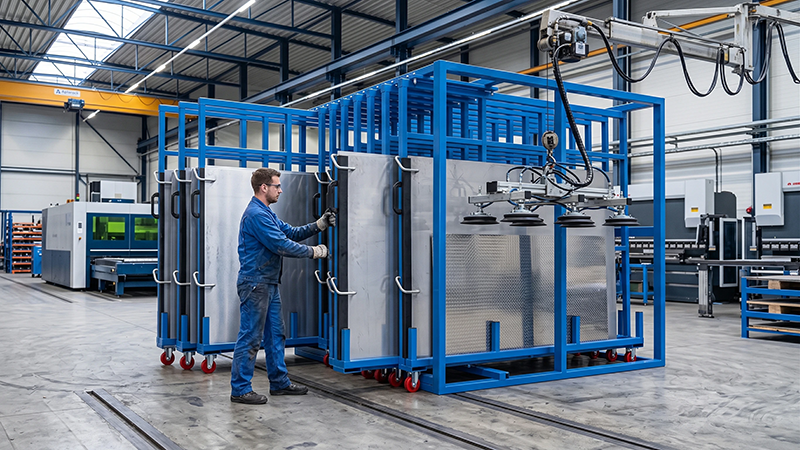
Traditional floor stacking forces people to guess where the next plate sits. That means more bending, more reaching, more accidental edge contact, and more forklift traffic through the same work zone. In a plant that sells safety as part of its brand promise, this is exactly the kind of blind handling behavior auditors look for. The workshop image of a pulled-out drawer shows the opposite approach: one operator-accessible layer, one clear load path, and no need to dig through unstable piles before a plate can move.
Why Aplarack fits the use case
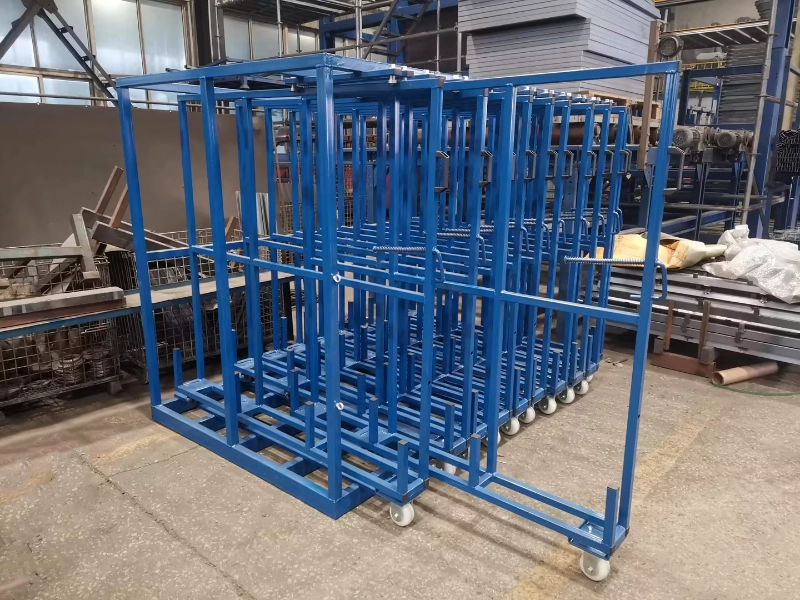
The fit comes from the motion logic. Aplarack uses a Q235 steel welded frame, roll-out drawer modules, and heavy-duty casters so the rack can move as a controlled unit instead of as loose material. The open top keeps crane access clear, while the drawer system keeps the operator’s movement strictly horizontal inside the rail path. That split between horizontal drawer travel and vertical crane lifting is what reduces unnecessary contact with heavy plates and lowers forklift dependence in narrow aisles.
What the structure proves in the photo
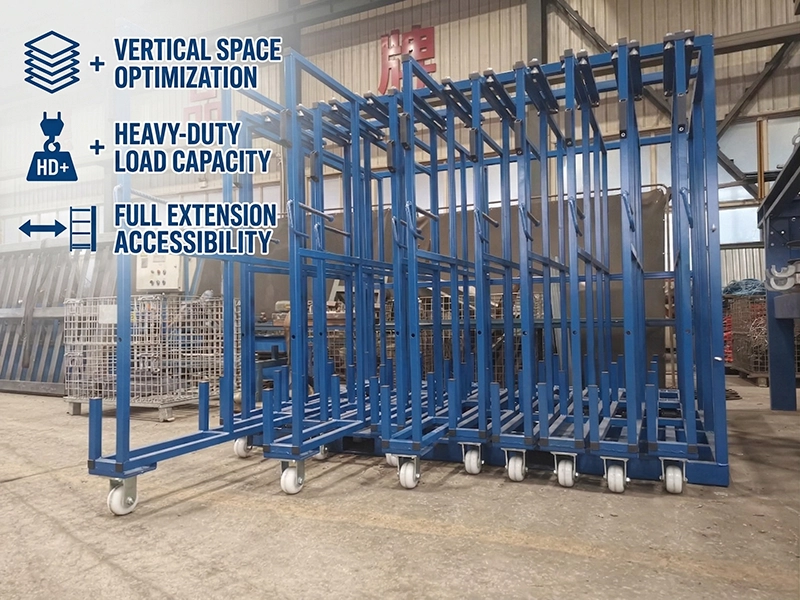
The supporting image shows multiple drawers arranged in a compact frame with overhead crane access above them. That matters for EHS because the rack is not asking workers to improvise. The load is kept in separate bays, the access path is visible, and the moving base is built for plant-floor repositioning instead of ad hoc pushing. This is also why the system can serve metal plate storage, glass sheets, and other flat stock without turning every retrieval into a manual lift-and-shift event.
What to specify before you approve the rack
- Drawer travel and rail control: confirm that every access cycle stays in a guided horizontal path, so staff never have to pry plates out by hand.
- Frame and load structure: specify the Q235 welded frame and the drawer count you need, so the system matches plate size and daily turnover.
- Mobility and aisle width: check the caster package and turning space, so the rack can replace some forklift moves instead of creating a new obstruction.
- Top clearance for lifting: keep a clear crane path above the rack, so vertical lifting stays vertical and never collides with the operator zone.