
 EN
 DE
 RU
 FR
 PT
 ES
 IT
 JA
Some buyers compare Mgrack against a welded A-frame and stop there. That is too narrow. The real comparison is between two different operating models: a fixed rack with zero assembly but poor return-freight efficiency, and a knock-down rack that needs assembly but performs better across logistics cycles.
That is why the Mgrack discussion should not be reduced to “which frame is stronger.” The smarter question is which structure makes more sense for repeated use, export movement, and practical factory handling.
Why welded racks still attract buyers
A welded A-frame has an obvious selling point. It arrives as one piece and can be used immediately. Some buyers prefer that because it removes on-site assembly and gives the impression of higher rigidity. For static or low-circulation use, that may be enough.
But the same fixed structure becomes a freight disadvantage once the rack has to be moved empty. That is where the apparent simplicity starts costing more than expected.
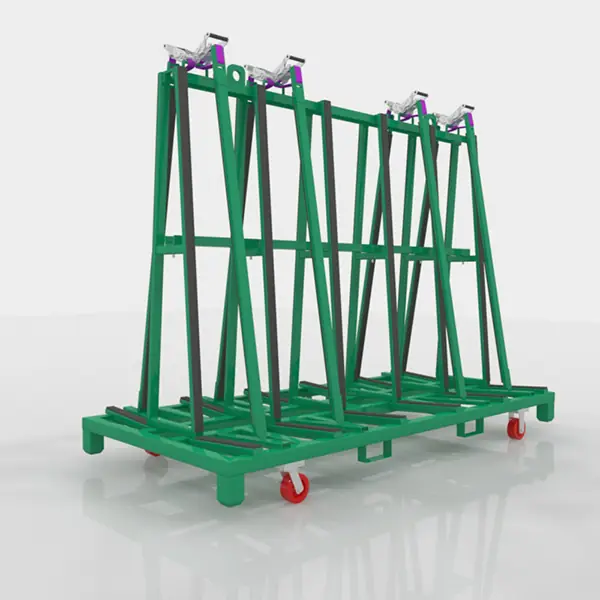
Where Mgrack creates a different cost logic
Mgrack uses a bolt-assembled KD structure. That means the rack can be dismantled into flatter components, stacked more efficiently, and shipped with less wasted empty volume. For buyers running container projects or repeated return loops, that changes the total cost picture.
This is the core difference. A welded rack minimizes assembly work. Mgrack minimizes repeat freight waste. Which one is better depends on what kind of operation the buyer is actually running.
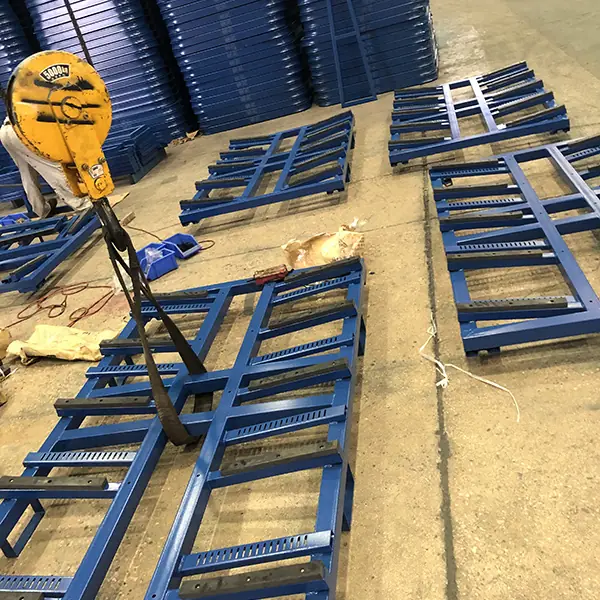
Why the comparison should include protection and movement
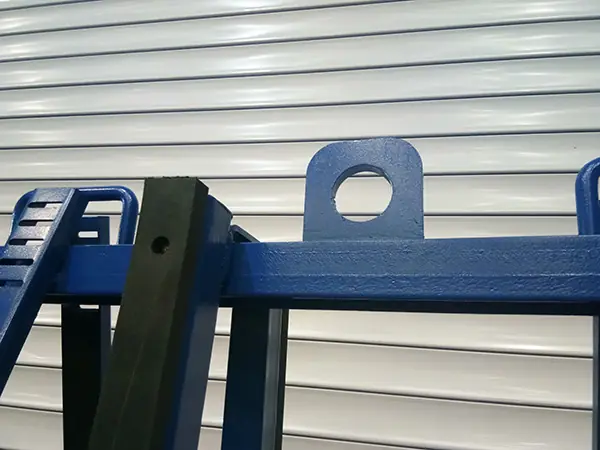
This is not only about shipping. Mgrack is also designed for real factory movement with fork access, wheel options, lifting interfaces, and protected contact areas. Those details matter in day-to-day use, especially when fragile panels are transferred repeatedly between process zones.
A cheap rack may look similar in a photo, but if it lacks proper rubber protection, stable restraint logic, or suitable mobility options, the handling result will be very different in practice.
Who should choose Mgrack and who should not
Mgrack is a strong fit for buyers who export in volume, recover empty racks, and care about repeat handling efficiency. It is also a good match where factory movement and material protection matter as much as initial purchase price.
It is a weaker fit for buyers who want a permanent static stand with no assembly at all and no meaningful empty-return cycle. In those cases, the main Mgrack advantage may not be fully used.

Frequently Asked Questions
Q: Is Mgrack always better than a welded rack?
A: No. It depends on the buyer’s use pattern. Mgrack is stronger in freight efficiency and repeated circulation, while a welded rack may suit static no-assembly use better.
Q: Does Mgrack require on-site assembly?
A: Yes. Buyers need to assemble the structure with bolts after delivery.
Q: Can Mgrack be used only for glass?
A: No. It is also used for stone slabs, solar panels, and door or window components.
Q: Is a welded rack always the stronger option?
A: Not necessarily in a useful business sense. Structural suitability must be judged by load, handling mode, movement frequency, and logistics cost together.
Ready to upgrade your workflow?
Contact our engineering team today to discuss your specific requirements and get a customized solution.