
 EN
 DE
 RU
 FR
 PT
 ES
 IT
 JA
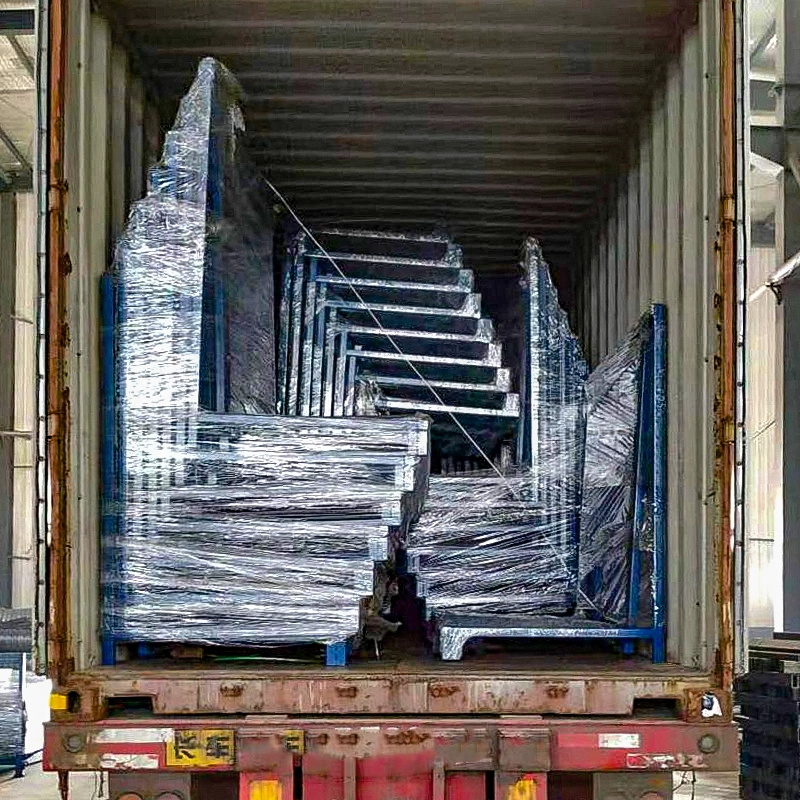
RETURNABLE GLASS RACKS / EXPORT LOGISTICS
Empty-rack nesting can turn a return truck from a full-load problem into a compact, traceable asset movement. The count is model-specific, so the right question is not “how many racks fit?” but “which rack geometry, nesting method, and asset rules apply?”
For a glass processor, distributor, or export project supplier, the empty leg is often where returnable packaging loses its economic advantage. A rigid rack that carries glass well but occupies the same footprint on the way home can consume truck capacity, container slots, and handling time. A nestable L-frame glass rack changes that calculation: the rack remains a reusable transport asset when loaded, then several empty frames occupy a much smaller return footprint after delivery.
Grack is built around that two-way movement. Its single-sided L-shape supports wall-side or back-to-back storage, while the empty frames can be nested or inverted when the specific design allows it. The result is not a universal truck-load promise. Return capacity depends on the rack model, base depth, upright height, nesting clearance, vehicle deck, and whether casters, retaining bars, or other accessories must remain installed.
How do empty L-frame glass racks nest for the return trip?
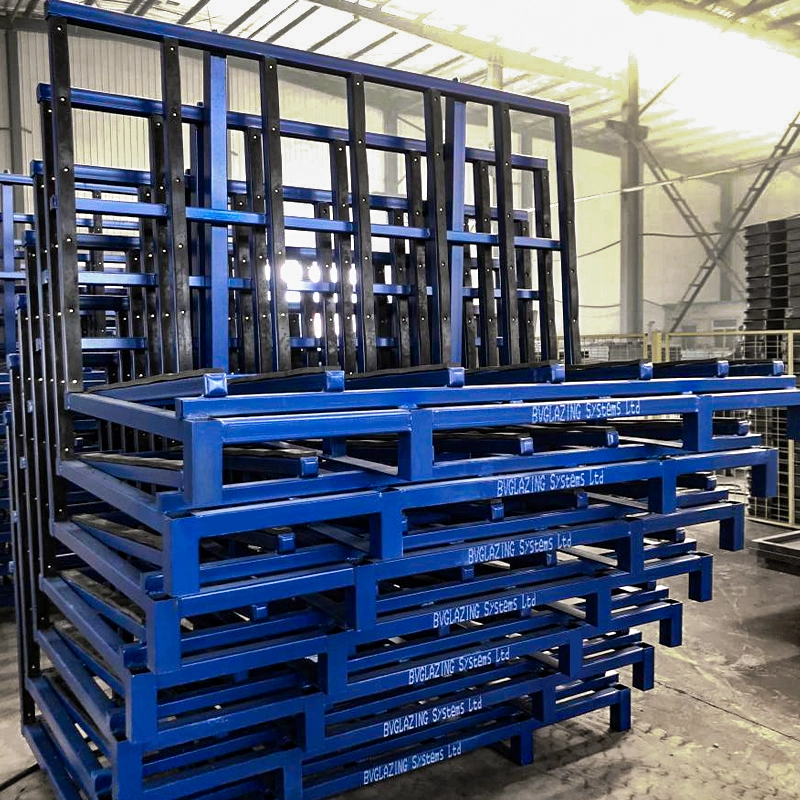
After the glass is unloaded, remove or secure project accessories according to the handling procedure, then inspect the base, lifting points, forklift pockets, and protective strips. Place the first empty rack on a level deck. Bring the next frame in the same orientation and guide its asymmetric L-shaped base into the open nesting space of the rack below; continue until the base channels and upper locating points are seated without forcing contact. If the design is approved for inverted stacking, turn the next frame only in the specified direction and repeat the same check. A strap or other approved restraint should secure each bundle before loading. The practical control point is the measured bundle height, not a guessed rack count.
How much return volume can a nestable glass rack save?
The answer must be quoted by model. The indexed project material shows a seven-rack nested stack and a return configuration described as reducing volume by more than 70%; another export loading image records a dense 40HQ arrangement of 98 empty racks. Product snapshots also show why these figures cannot be merged into one standard claim: an 1180 × 600 × 1155 mm model is documented at 250 units in a 40HQ, while larger examples record 84 units for an 1800 × 950 × 1600 mm single-side rack and 78 units for a 2000 × 1300 × 1300 mm rack. Measure one actual nested stack, divide the usable truck or container height by that bundle height, and leave clearance for restraint and safe handling.
How should returnable rack assets be numbered and controlled?
Give every frame a durable asset number tied to its model, nominal dimensions, owner, and approved use. Scan or record the ID at dispatch, delivery, empty return, inspection, and repair. The return log should distinguish a rack that is physically present from one that is loaded with glass, at a jobsite, nested in a bundle, or awaiting inspection. This is where a reusable glass transport rack differs from a disposable wooden crate: the frame can be counted, inspected, repaired, and redeployed instead of becoming a recurring packaging-disposal cost. The screwed steel-core rubber protection is also easier to audit than a glued pad: inspect the strip, screws, and contact surface before the rack returns to service.
What must be confirmed before mixing new and old racks?
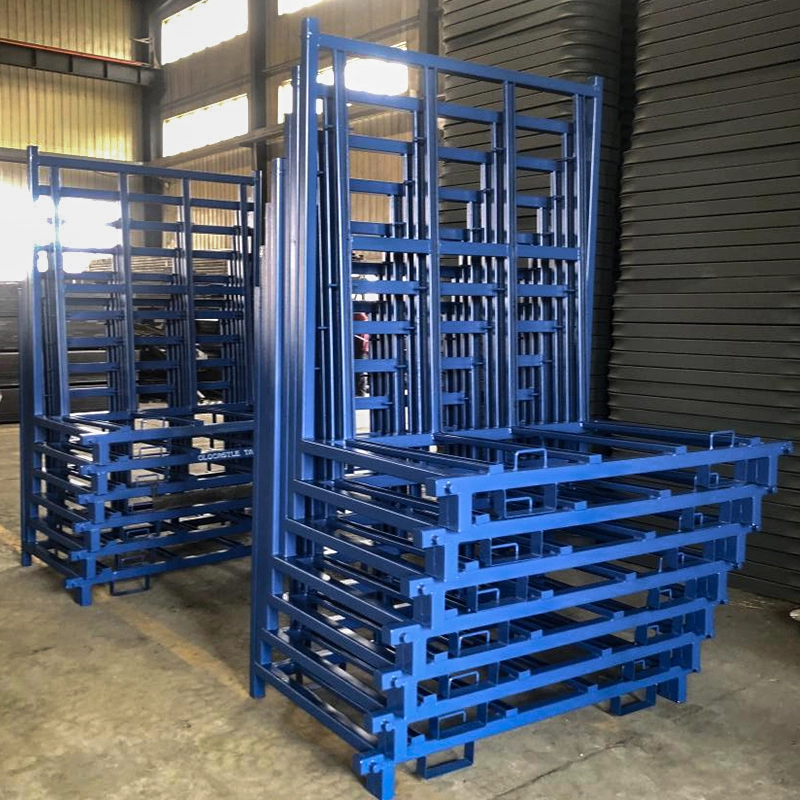
- Confirm the structure first: compare base width and depth, upright height, nesting opening, locating points, and the approved nesting or inverted-stacking direction. Similar-looking L-frame glass racks are not automatically interchangeable.
- Match handling interfaces: check forklift fork width and entry direction, pallet-jack clearance, lifting-pin position, deck load, and vehicle restraint points. Grack configurations can include forklift pockets, four-way entry, lifting pins, casters, retaining bars, or tie-down points, but these are project variables.
- Separate compatible from merely co-locatable: old and new racks may work side by side for staged replacement, yet still be unsafe to nest together. Trial one pair on a level surface and approve the result before creating a mixed bundle.
- Quote the actual model: capacity and container count vary with geometry. Confirm the glass type, sheet sizes, load weight, 85°–87° loading angle, rubber protection, coating, and return vehicle before converting a volume estimate into a purchase or freight plan.