
 EN
 DE
 RU
 FR
 PT
 ES
 IT
 JA
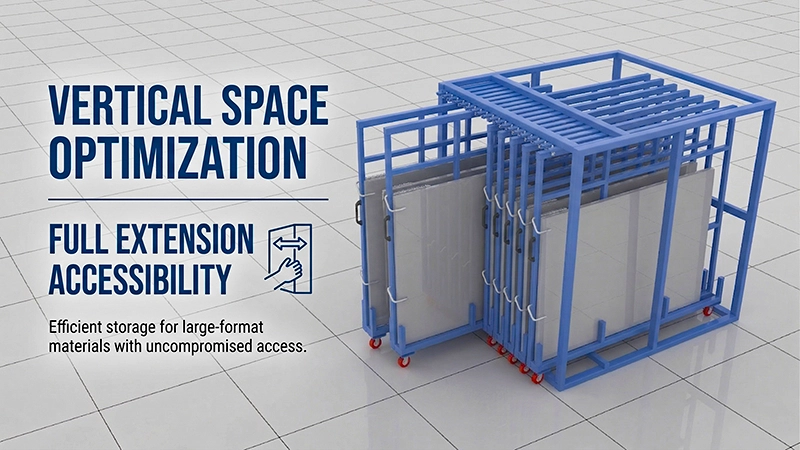
Aplarack vertical sheet metal rack
Vertical sheet metal rack storage for Toronto fabrication shops that need faster picking, safer access, and less rehandling under high labor cost pressure.
Commercial awnings, custom railings, and mixed metalwork jobs rarely run on one standard panel size. Teams need the right sheet now, not after a long shuffle of stacked material. In a Toronto shop, where labor is expensive and schedules are tight, every minute spent digging through the wrong stack becomes real cost. That is why the storage method matters as much as the cutting, welding, or assembly step that follows it.
Traditional flat stacking creates a hidden picking problem. When the target panel is buried at the bottom or trapped in the middle, workers have to move outer sheets first, bring in equipment, or spend energy handling material that is not even needed. Aplarack turns that workflow into a vertical sheet metal rack with independent drawers, so the operator goes straight to the target bay instead of stripping the whole stack down layer by layer.
Independent drawer access is the real answer to slow picking
The first thing this rack changes is the picking motion itself. Each sheet lives in its own roll-out drawer, so the operator can pull only the needed bay and leave the rest of the inventory untouched. That is the core reason the layout fits shops handling different sheet sizes, glass panels, or coated aluminum sheets for custom jobs. The top remains open for overhead crane or vacuum suction lifting, which keeps the access path vertical and avoids side-loading the material. The result is a direct-retrieval workflow instead of a search-and-move workflow.
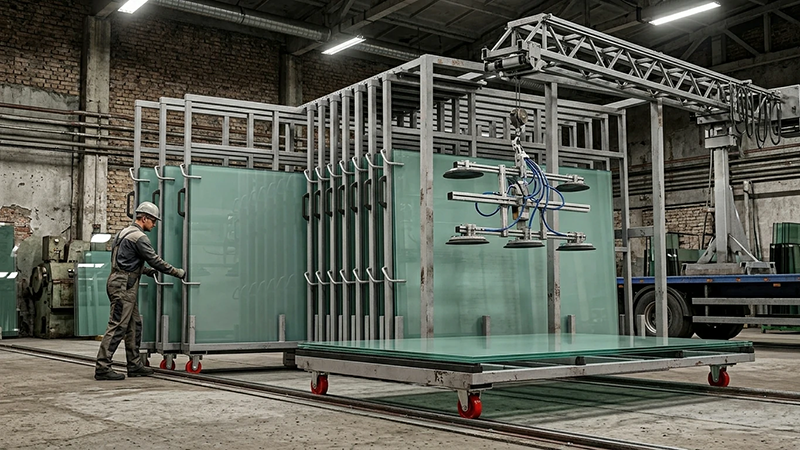
Why the structure fits heavy-duty fabrication floors
Aplarack is built around a Q235 steel frame, so the rack is not just a storage frame with a pretty finish. The welded body, guide rollers, and heavy-duty casters are there to keep the drawers moving smoothly under load and to keep the whole unit practical on a busy shop floor. The open-top design preserves crane clearance, while the drawer-by-drawer layout makes it easier to separate inventory by thickness, finish, or job order. For mixed production, that separation matters because the next part can be found without disturbing the rest.
The product fit comes from combining movement and control. Workers get a vertical sheet metal rack that can be placed where the work happens, rolled into position, and accessed with one controlled pull. Instead of treating storage as a static pile, the shop gets a mobile picking system that supports repeat access without the same manual drag and lift cycle every time.
What the safety and access details prove in the photos
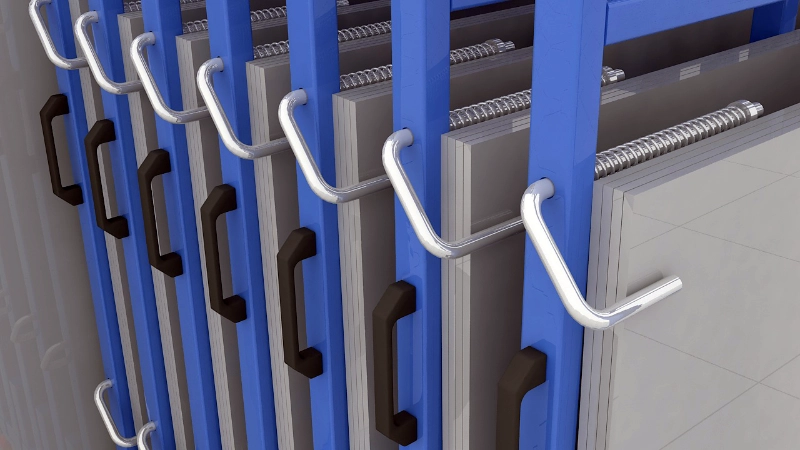
The close-up image makes the mechanical logic easy to read: spring-loaded safety pins, strong handles, and a stable drawer interface keep the bay secure when it is partially or fully extended. That matters when crews are lifting panels with a crane or suction lifter, because the rack has to hold position while the target sheet is removed. The design is meant to give the operator confidence during repetitive access, not just during a showroom demonstration. It supports the same job day after day: roll out, lift the target sheet, and close the bay without disturbing the surrounding stock.
What to confirm before you specify a vertical sheet metal rack
- Check that the drawer travel lets the target sheet clear surrounding stock so one panel can be removed without moving the full stack.
- Confirm the top opening gives your crane or vacuum lifter a straight vertical access path for safe pickup.
- Match the rack frame, guide rollers, and casters to the daily load and shop-floor movement pattern.
- Make sure safety pins and drawer handles are part of the design so partially extended bays stay stable during retrieval.