
 IT
 EN
 DE
 RU
 FR
 PT
 ES
 JA

 | Go to your unloading table right now. Look at the pile of cut glass. The CNC software has done its job with nesting to optimize yield. Material utilization looks great on a spreadsheet. But in the shop? The sequence is a total disaster. Your operators are stuck manually sorting hundreds of mismatched pieces. It's slow, dangerous, and eating your margins. |
The Chaos in the Workshop
Watch your operators loading 6mm glass onto a standard storage rack. Those racks usually have gaps between the rollers of 14mm. Now watch them push that rack across a floor joint. The thin glass vibrates violently. They have to stop constantly to realign shifted panels.
Check your scrap bin. I guarantee you'll find edge chips and micro-cracks. That's money thrown away.
Then look at the space between your edging machine and the glass tempering furnace. It's a massive Work-In-Progress (WIP) bottleneck. Standard A-frames take up an enormous amount of space. If you have a run of short, irregularly shaped architectural glass, those pieces tip over because they barely touch two rollers. Operators get hurt trying to grab heavy glass.

The Physical Database: Dynamic WIP Buffer Solution
We don't need another static storage rack. We need a dynamic WIP buffer. Think of it as a physical database. You need random access. An operator must be able to pull a single specific sheet without moving five other heavy pieces.
This requires eliminating wide rollers completely. This is exactly where a harp trolley is appropriate. Using full-base harp trolleys, you get a continuous base with grooves that supports the entire bottom edge of the glass. Short, irregularly shaped glass drops directly into the groove and stays upright.
To protect the surface, the dividers use steel wires coated with PVC sheaths. Each individual sheet is isolated. Your expensive Low-E coatings don't get scratched.
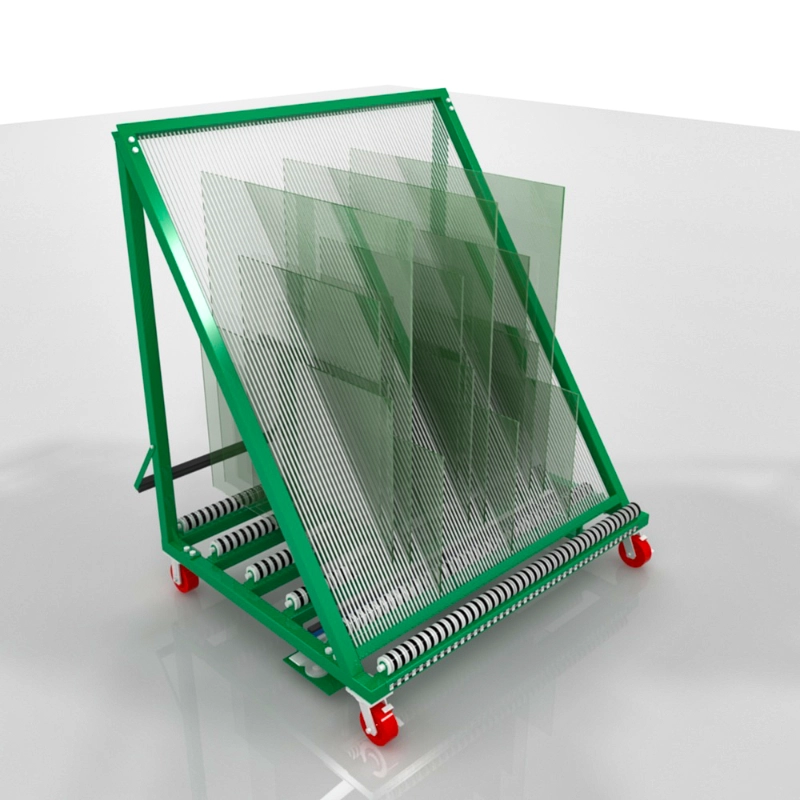
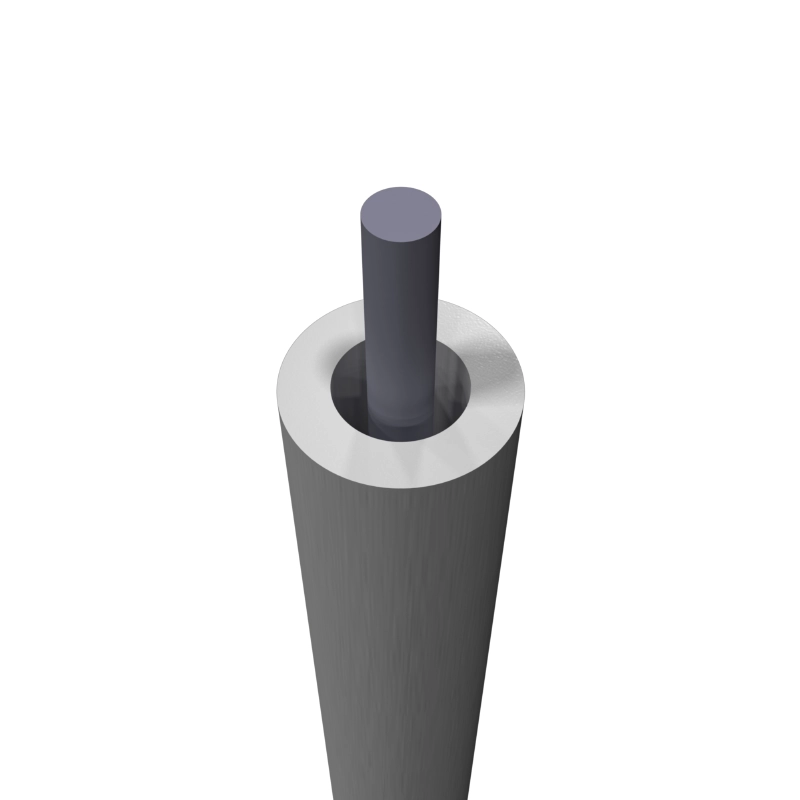
If you run an Insulated Glass Unit (IGU) line, harp trolleys for sorting glass units serve as a matching station. Workers sort and match individual panels directly in the independent grooves before pushing the entire batch to the sealing station.
When it's time to move, a heavy glass harp trolley relies on a critical component: the pedal lock. Press the pedal and a lever lifts the glass out of the grooves, pressing it firmly against a rubber block. The load is rigid. No vibration on floor cracks.
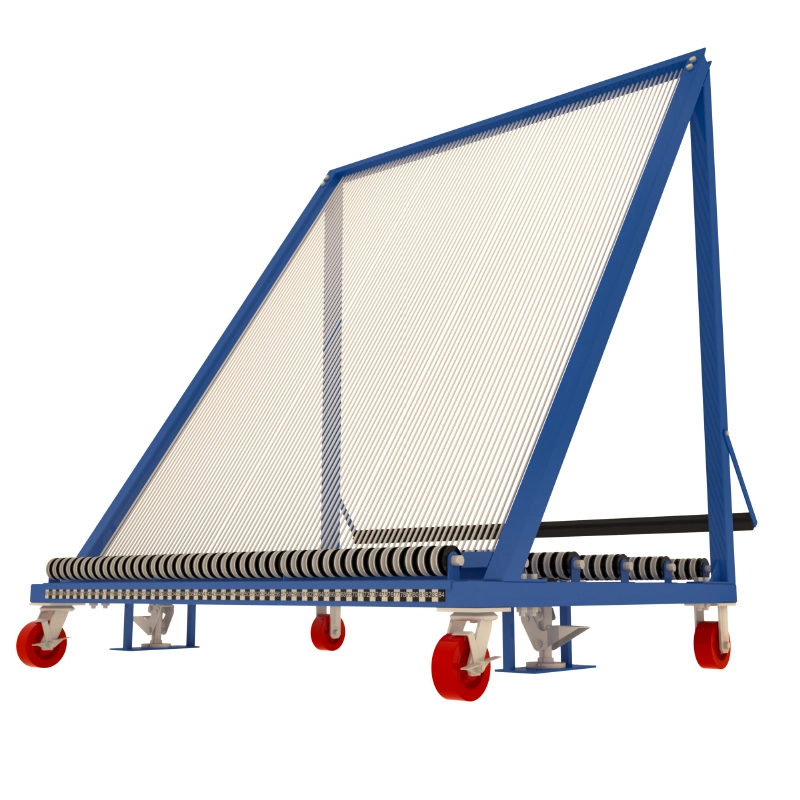
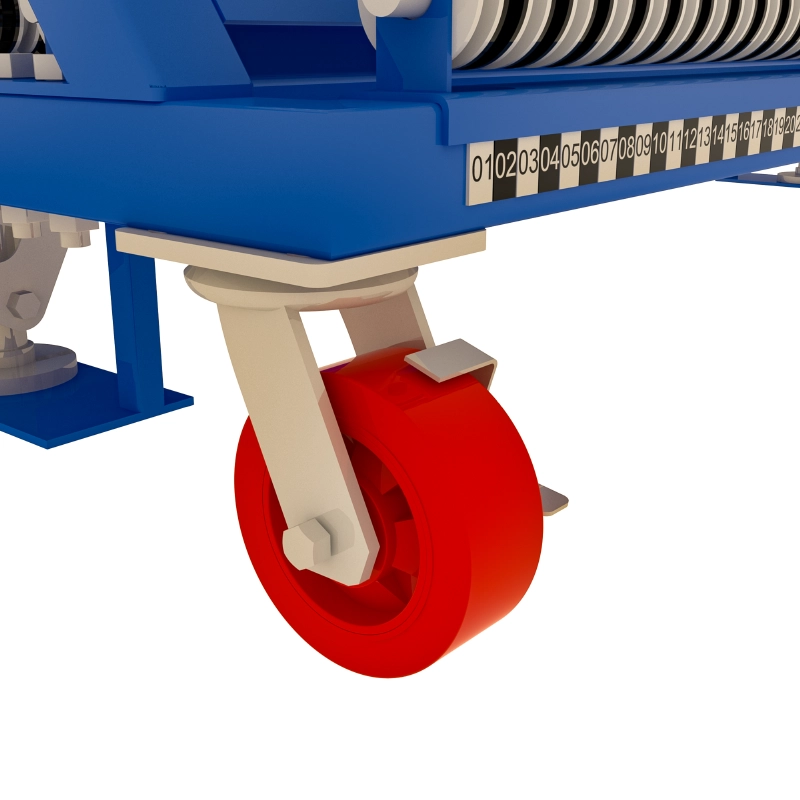
Engineering Realities (No Magic Here)
Let me be clear. A glass harp trolley is a highly specific tool, not a generic storage rack.
- Don't buy one if you just want to store uniform, loose raw sheets for months. Use an A-frame for static storage.
- Don't blindly trust operators. If an operator forgets to press the locking pedal before pushing the trolley, the glass will slide, hit the frame, and break. It requires discipline.
- Don't just buy generic harp trolleys sold online. A standard glass harp trolley will disappoint you if the grooves don't match your glass. Standard harp trolley spacing in the glass industry is often around 1/2 inch. If you use 6mm glass in a 1/2-inch groove, it still wobbles. You need custom 8-10mm grooves to securely lock in that thin glass.
Domande Frequenti
Can this trolley handle short, odd-shaped glass formats?
Yes. A grooved steel base provides continuous support from front to back, unlike spaced rollers. The glass won't tip over.
Will the dividers scratch my coated glass?
No. The wire dividers are wrapped in elastic PVC sheaths. It provides a soft contact area for Low-E glass.
Is it safe to push through a busy workshop?
Only if you use the pedal. Activating the pedal lifts and locks the glass against a rubber pad, making the entire load rigid for transport.
Prossimi Passi
Stop guessing with generic equipment. Grab your tape measure. Write down your thinnest glass thickness and your most extreme height-to-width ratios. Send those numbers to our technical office. We'll define a custom groove width that actually stops breakage on your floor.
CONTATTACI
Non esitare a contattarci se hai domande o requisiti speciali. Compila il modulo qui sotto!
Request a Factory-Direct Price Quote
Get customized CAD drawings, dynamic loading calculations, and wholesale price quotes. Response within 12 hours.