
 EN
 DE
 RU
 FR
 PT
 ES
 IT
 JA

Walk onto any glass processing floor. Watch the operator pulling a sharp, irregular trapezoid off the CNC cutting table. Or watch them handle a piece of expensive, coated Low-E glass. They try to set it on a standard roller cart. The rollers are usually spaced about 14mm apart. For a standard square, maybe it works. But for architectural shapes with short bottom edges or offset centers of gravity, the glass falls into the gaps. It tilts. It creates an immediate tipping hazard on the floor. |
The Hidden Cost of Standard Roller Carts for WIP Transit
Then look at the thin glass. You process 6mm sheets for custom laminates, or even thinner materials like 2mm to 3.2mm panels for the solar sector. An operator pushes that loaded cart across an uneven shop floor. The wide roller spacing offers zero lateral support. The sheets rattle violently. The edges smack against the metal frame.
You get micro-cracks. You lose high-margin workpieces before they even reach the glass tempering furnace or the washing machine. You fill up the scrap bin because of a lazy material handling setup.
Relying on manual labor to carry these heavy, irregular sheets is slow and spikes your injury risks. We need a different mechanical approach for moving Work In Progress (WIP) materials.
The Engineering Shift: Continuous Support and Isolation
To stop the damage, the physical contact points must change.
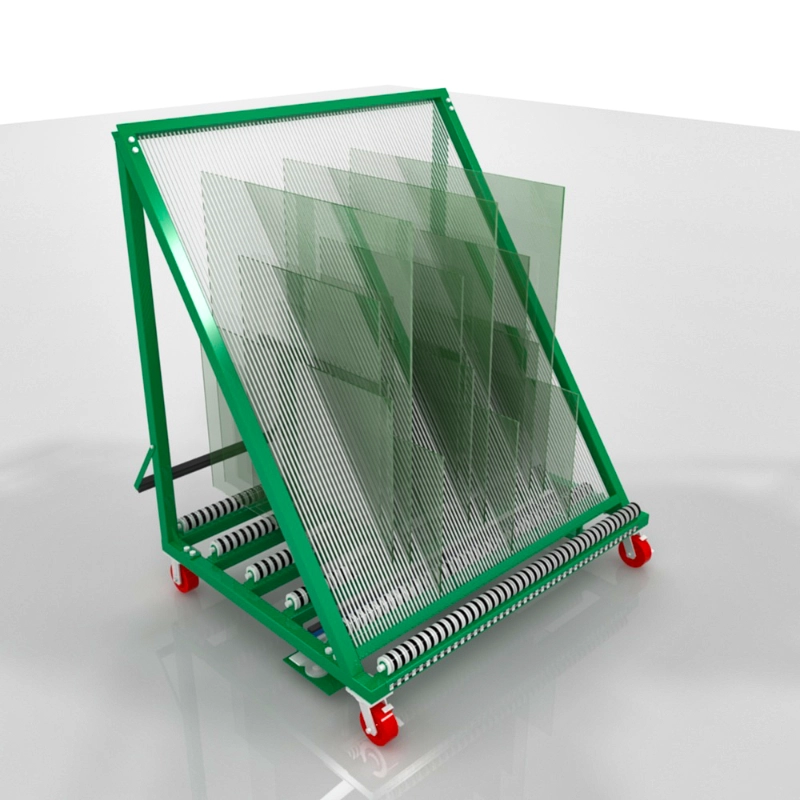
First, we drop the spaced rollers. They fail non-standard geometries. The equipment needs to provide continuous support from front to back along the bottom edge of the glass. A full steel slotted base achieves this. It does not matter if the bottom edge is 20 inches or 60 inches long; a full base catches it.
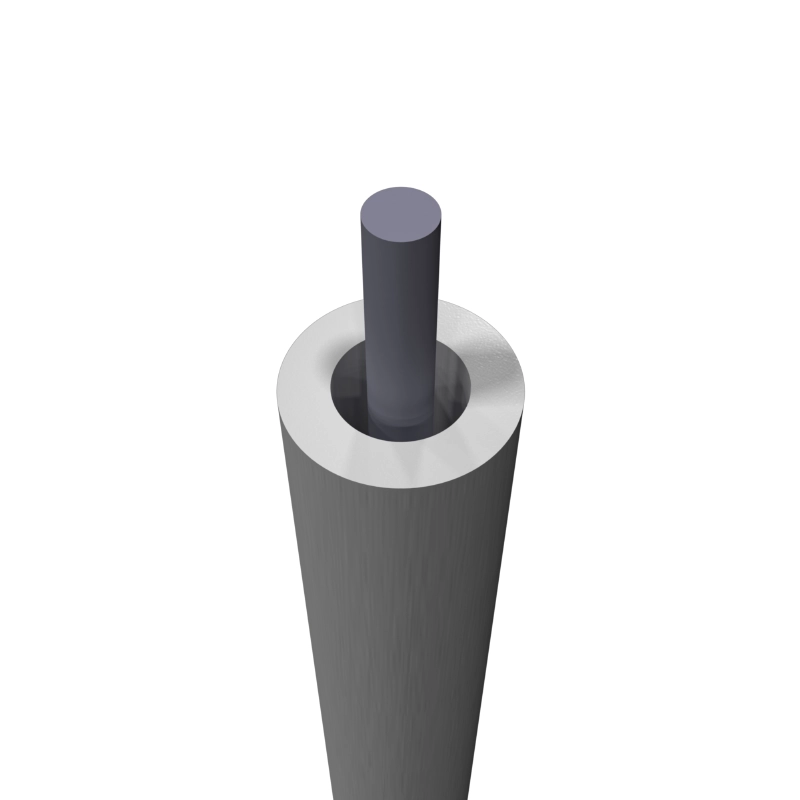
Second, we isolate the sheets. High-value coated glass cannot touch metal or other glass. The divider system should act like strings, separating each piece individually. Using a composite structure—steel wires wrapped in flexible PVC sleeves—provides the required rigidity while creating a soft, non-abrasive contact surface.
Third, we lock the load. Pushing glass over floor joints causes jumping and sliding. A basic friction brake on a caster is not enough. The unit needs a mechanical leverage system. A foot-pedal lifting lock is required. When the operator steps on the pedal, internal levers lift the entire load of glass up from the slots and secure it tightly against rubber buffer blocks on the back. The glass becomes one rigid mass with the frame.
Implementing the Right Tool: The Industrial Harp Rack
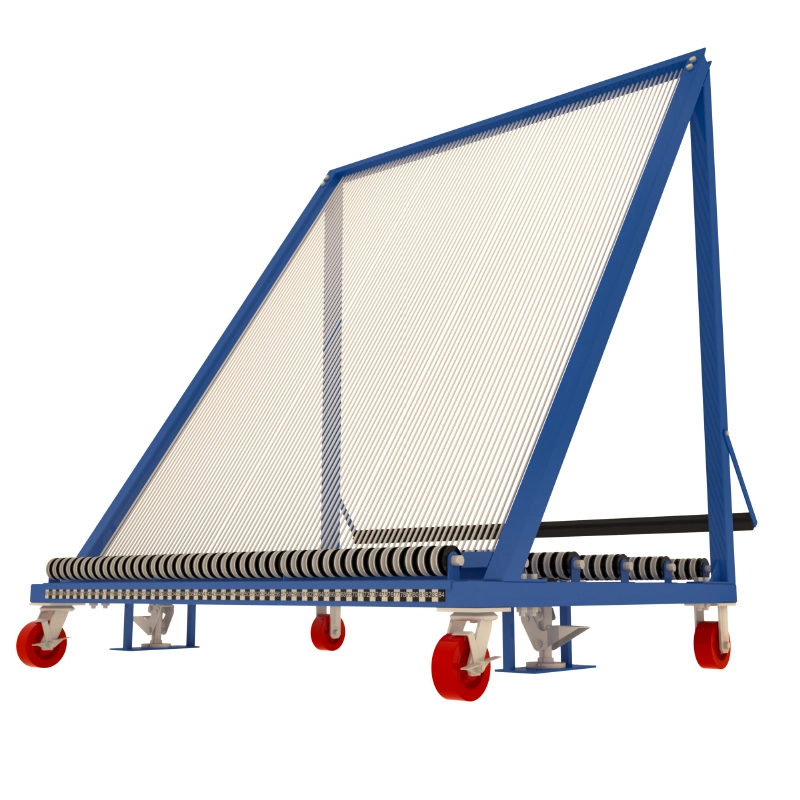
This specific structural configuration is an industrial harp rack.
When handling complex architectural orders, full base harp racks are the exact mechanism that prevents irregular shapes from leaning and falling. If you run an Insulated Glass Unit (IGU) line, harp racks for sorting glass units serve as the perfect staging area. Operators use the dense, independent slots to pair single sheets before sending the entire harp rack glass trolley to the sealing station.
For operations processing extreme thin sheets, the harp racks glass industry standard is customized spacing. The slot width can be precision-machined down to 8-10mm. This tight grip eliminates the rattling that destroys 6mm or thinner glass.

The Reality Check: Boundaries and Limitations
This equipment requires discipline.
- It requires exact data: You cannot order this off a shelf. You must know the exact dimensions of your thinnest glass and the most extreme length-to-height ratios your shop handles. If the slot parameters are wrong, the system fails.
- It requires operational habits: The safety mechanism only works if your guys use it. Operators must build the strict habit of stepping on the foot pedal to lock the load before they unlock the casters to move. If they forget, the glass slides and crashes internally.
- It is not a warehouse shelf: Do not use this to hoard massive batches of identical raw glass for months. If you need maximum load density for static storage, use an A-Frame. This is a dynamic WIP buffer for short-distance, high-frequency sorting.
- Assembly requires patience: These are flat-packed with bolt connections to cut shipping costs. During factory assembly, operators must keep all bolts loose to align the pillars and the base grid. Tightening them too early misaligns the entire frame.

Frequently Asked Questions
1. What is the minimum glass thickness a custom harp rack can support?
We can machine slot widths down to 6mm for ultra-thin glass applications, making it suitable for 2-4mm solar and specialty glass panels without any rattling or edge chipping.
2. Can harp racks be used for outdoor storage or transport between facilities?
For outdoor or over-the-road transport, we offer hot-dip galvanized finish options and secure tie-down points to keep glass stable during transit, with the same zero-scratch protection as indoor units.
3. How much time does it take to assemble a flat-packed harp rack?
Two workers can assemble a standard harp rack in 30-45 minutes with basic hand tools, no special training or equipment required.
4. Can we add custom numbering or barcoding to slots for our production management system?
Absolutely. We offer custom laser-etched slot numbering, barcoding, or RFID tagging for full integration with your MES/WMS system for automated tracking of WIP inventory.
GET IN TOUCH
Please Don’t Hesitate If You Have Any Questions Or Special Requirements Fill In The Form Below!
Request a Factory-Direct Price Quote
Get customized CAD drawings, dynamic loading calculations, and wholesale price quotes. Response within 12 hours.