
 EN
 DE
 RU
 FR
 PT
 ES
 IT
 JA
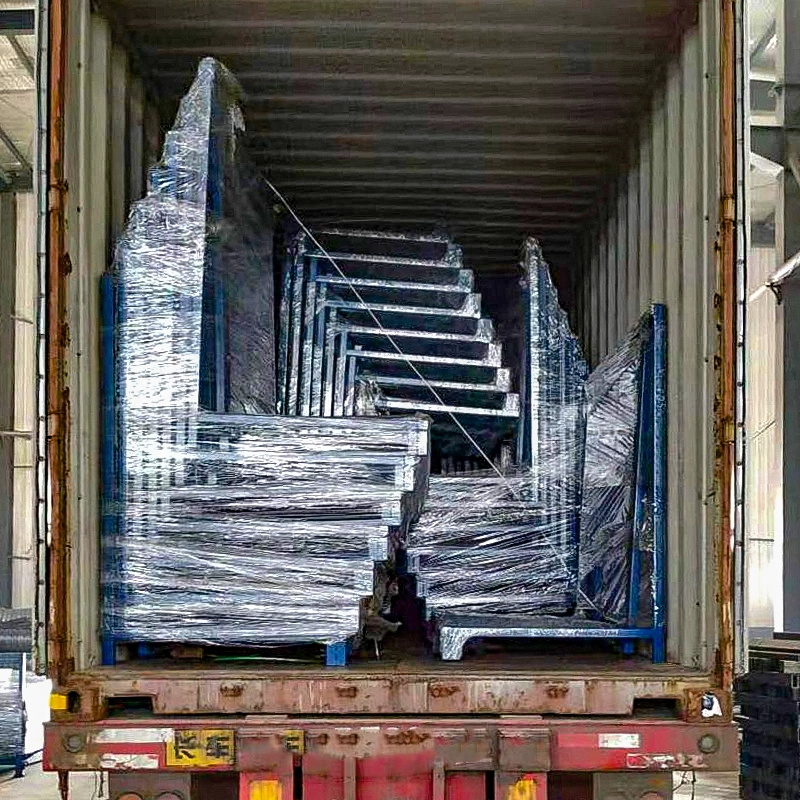
Export logistics / reusable transport racks
Wooden crates disappear after one trip. Grack stays in the loop: it nests for return, carries an asset ID, and can be managed as a reusable shipping frame instead of disposable packaging.
For export teams and 3PL operators, the cost problem is not the outbound trip. The real drag starts when empty packaging comes back as waste. If a wooden crate only protects one shipment and then becomes scrap, every cycle adds build cost, disposal cost, and yard handling time. A returnable rack changes that math. It becomes a reusable transport asset that can be packed, counted, returned, inspected, and redeployed.
That is why Grack fits projects that ship glass repeatedly on the same lane. Instead of paying for another one-time crate, you keep the frame in circulation. The rack nests for compact return, so reverse transport is easier to plan and easier to justify. The export team gets a better handle on empty-backhaul cost, while the warehouse gets a cleaner way to manage frame inventory as equipment, not waste.
1. Why reusable racks beat wooden crates on repeat export lanes
Wooden crates are acceptable when the job is truly one-off. But when the same customer, the same route, or the same glass size repeats, disposable packaging forces you to rebuild the same protection every time. A returnable rack is different: it is designed to stay in the loop. The frame can be loaded, tied down, shipped out, unloaded, nested back, and dispatched again. In the long run, that shifts spend from recurring packaging loss to a managed asset pool. In Grack’s export-oriented layout, the nested stack mode is the key. It keeps empty return volume low, which matters as soon as the backhaul leg becomes part of the freight bill.

2. How to calculate return cost without guessing
The clean way to calculate return cost is simple: treat the rack as an asset with a service life, then spread its purchase cost across the number of trips it can realistically complete. After that, add reverse freight, handling, and inspection. If the rack nests tightly, the return leg is cheaper because you move more empty frames in less container space. If the frames are used on the same lane month after month, the cost per trip keeps falling. That is the practical advantage over a crate: a crate ends at scrap, while a rack earns back its purchase price over many cycles.
For finance and operations teams, the question is not whether the rack is cheaper on day one. It is whether the reusable system lowers total landed packaging cost after the second, third, and tenth shipment. When the answer is yes, the rack stops being packaging and starts behaving like an asset on the balance sheet.
3. Asset numbering and mixed-fleet compatibility
Once a rack is reusable, it needs a tracking method. The simplest model is a unique asset ID on every frame, linked to project, route, and inspection history. That lets you know which racks left the plant, which ones came back, and which ones need repair before the next dispatch. It also makes loss control much easier: an unnumbered frame is easy to misplace; a numbered frame is part of a managed fleet.
Mixed-fleet compatibility should never be assumed. If you plan to run new racks with older units, first confirm the structure that actually carries the load: the frame geometry, the nesting interface, the base width, and the stop points that keep the stack aligned. If those points match, pooling is possible. If they do not, split the fleet by family and keep the return flow separate. That is the safe way to avoid forcing two different rack generations into the same nesting logic.

What to specify before you buy
- If the shipment repeats, specify a returnable rack pool instead of single-use packaging.
- If empty freight is expensive, specify nesting depth and return stack volume before approving the order.
- If you want asset control, specify a unique rack ID, inspection log, and return ownership rule.
- If you need to mix old and new racks, specify the structural match points first; do not mix by assumption.