
 EN
 DE
 RU
 FR
 PT
 ES
 IT
 JA
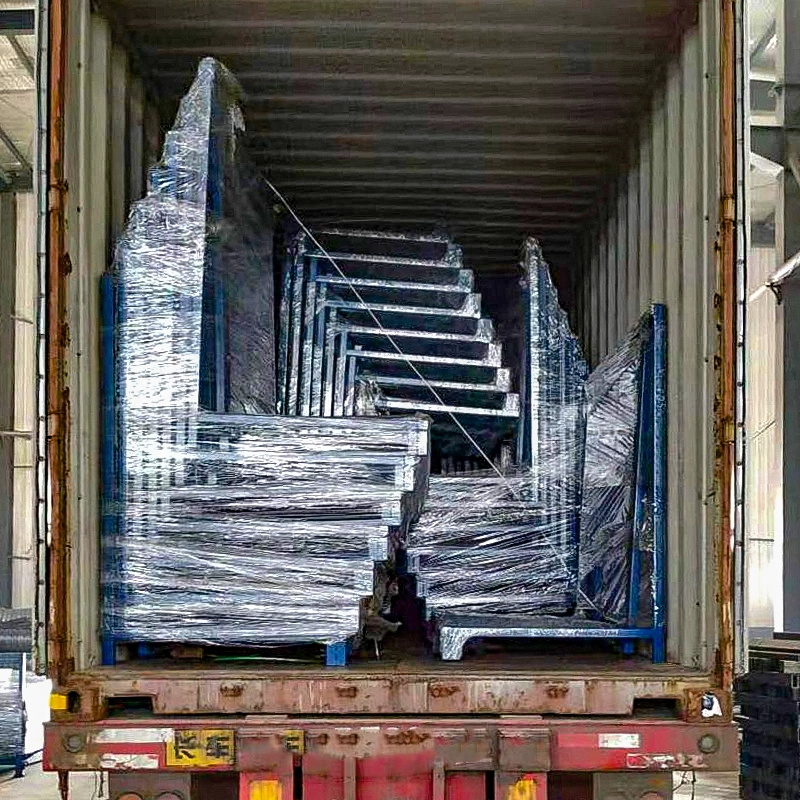
Empty rack return logistics / nestable glass rack
When glass racks travel full, max load matters. When they travel empty, nesting ratio, return volume, and warehouse footprint decide the real cost.
For procurement teams comparing a glass storage rack, the biggest trap is to read only the maximum load number and stop there. Max load is important when the rack is carrying glass. It tells you how much weight the frame can safely support in a loaded condition. But in export programs, depot circulation, and plant-to-plant return loops, the rack spends a large part of its life empty. That is where nesting design becomes the real cost lever.
Grack is built around that logic. The empty racks can be stacked by inverting and nesting the L-frame geometry, so the dead volume in return transport drops sharply. In the 40HQ export loading example shown here, the nested rack count reaches 98 units in one container, and the exact count varies by model and size. That is why the buying decision should start with reverse logistics, not with the single biggest load figure on a spec sheet.
How nesting works in daily operation
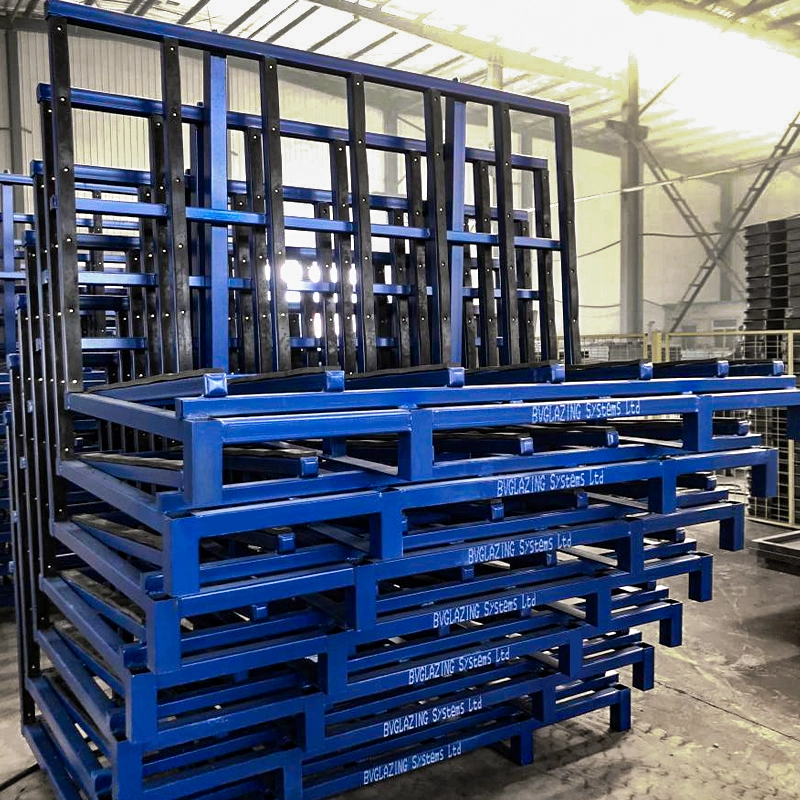
The operating sequence is simple, but it depends on the rack geometry. After unloading, the operator removes the straps, clears the glass, and turns each empty rack into the next rack’s footprint. The asymmetric L-shape lets the base and uprights interlock instead of sitting side by side. The top lugs, base channels, and forklift pockets stay aligned so the whole stack can be moved as one unit. In other words, the rack does not become scrap volume after delivery; it becomes a compact return package.
This is why the close-up on the nested stack matters. It shows that high-density return is not accidental. The nesting fit is controlled by the frame shape, welding consistency, and the alignment of the load-bearing base sections. A rack that nests well is faster to collect, easier to count, and cheaper to ship back.
Why return volume changes the real buying math
A rack with a stronger load rating may still be expensive if it returns as an oversized empty frame. Every extra cubic meter in the return leg consumes freight, yard space, handling time, and sometimes even extra labor to stage the empties. That is why reverse logistics often outruns max load as the procurement KPI in export-driven glass supply chains.
Grack’s nesting design is meant to cut that dead space, and the benefit is measurable in three places. First, it reduces backhaul freight because more empty racks fit into one truck or container. Second, it frees warehouse and yard space because the empties stack into a smaller footprint. Third, it reduces handling touches because the whole nest can be collected and moved as a bundle. For wholesalers and processors with frequent rack circulation, that usually matters more than adding another number to the full-load rating.
The export image supports this point clearly: a 40HQ filled with nested empty racks shows that return packaging can be planned like a real logistics asset, not as afterthought inventory.
Why max load is not the only spec that should be checked
Maximum load still matters, but only for the loaded state. It answers one question: how much glass can the rack safely support when it is full. It does not answer whether the rack can be returned economically, stored without blocking aisle space, or bundled quickly after unloading. A buying team that looks only at the load number can end up with a rack that performs well on the shop floor but becomes costly in the reverse loop.
That is where the rack’s structural details matter. The mechanically fastened protective rubber lining helps avoid edge damage and loose-padding problems. The nested geometry keeps the empty frame compact. The forklift channels and lifting points let the whole stack move cleanly. Together, those details make the rack useful across the full cycle: loading, unloading, storage, return, and re-staging.

What to verify before you choose a nestable glass storage rack
- Check the nesting ratio by model, not by marketing claim alone. A 40HQ example may reach 98 units, but the exact count depends on rack size and geometry.
- Check whether the return stack can be handled as one bundle with forklift pockets and interlocking top sections.
- Check the frame protection method. Mechanical fastening is more stable than relying on adhesive-only padding in long service cycles.
- Check both costs: loaded transport capacity and empty return cost. The best rack is the one that performs in both directions.