
 EN
 DE
 RU
 FR
 PT
 ES
 IT
 JA


Your IGU assembly line is grinding to a halt. Operators are wasting precious minutes hunting for matching lites, and your scrap bin is overflowing with glass damaged during chaotic in-plant transfers. The bottleneck between your CNC cutting table and laminating line isn’t the machinery—it’s the disorganized, high-risk process of staging and sorting individual glass units. It’s time to stop the chaos.
Why are harp racks for sorting glass units essential for IGU?
In the world of Insulated Glass Unit (IGU) manufacturing, every second and every square foot counts. The journey of a glass lite from the CNC cutting table to the IGU production line is fraught with risk. Traditional storage methods, like leaning lites against walls or using bulky A-frame racks, create bottlenecks, invite damage, and turn the critical process of “pairing” lites into a time-consuming nightmare. For any modern Wholesale Glass Fabricator, optimizing this transitional stage is not just an improvement—it’s a necessity for survival. This is where a dedicated sorting system becomes indispensable.
The “Pairing” Predicament: How Disorganization Cripples IGU Throughput
Before: The Frantic Search
Picture this: an operator on the IGU line needs the matching lite for a high-value Low-E coated piece. It’s somewhere in a stack of 20 other lites on a generic A-frame. He has to carefully remove multiple heavy pieces, one by one, just to find the correct match. This “treasure hunt” not only wastes valuable production time but each additional touch increases the risk of scratches, fingerprints on coated surfaces, or catastrophic edge chipping. The entire line waits, and efficiency plummets.
Why It Works: Systematic, High-Density Sorting
A Harp Rack transforms this chaos into a streamlined, systematic process. Its design features dozens of closely spaced, individual slots. Instead of a disorganized stack, each lite is assigned its own dedicated, numbered position. The process shifts from a frantic search to a simple, error-proof “pick-by-number” operation. Operators can instantly locate and retrieve paired lites for an IGU, dramatically accelerating the “kitting” or “pairing” stage that feeds the assembly line.

After: Seconds, Not Minutes
With a Harp Rack integrated as a mobile Work-in-Progress (WIP) buffer station, the operator simply glances at the work order, walks to the rack, and pulls the corresponding lites from slots #57 and #58. The pairing process is completed in seconds. This newfound speed and accuracy create a smooth, continuous flow of materials to the IGU line, maximizing the throughput of your entire facility.
Beyond Simple Storage: Protecting High-Value Lites from Micro-Fractures
Before: The Hidden Cost of Vibration and Impact
When thin glass lites (e.g., 1/4 inch) are stored in racks with wide, unforgiving spacing, they wobble and vibrate during in-plant transfer. This constant, subtle movement can cause invisible micro-cracks along the edges. These defects often go unnoticed until the lite shatters in the tempering furnace or, even worse, fails after installation, leading to costly replacements and a damaged reputation. This is a critical risk, especially when handling expensive materials like laminated glass or lites with delicate Low-E coatings.
Why It Works: Isolate and Protect Every Lite
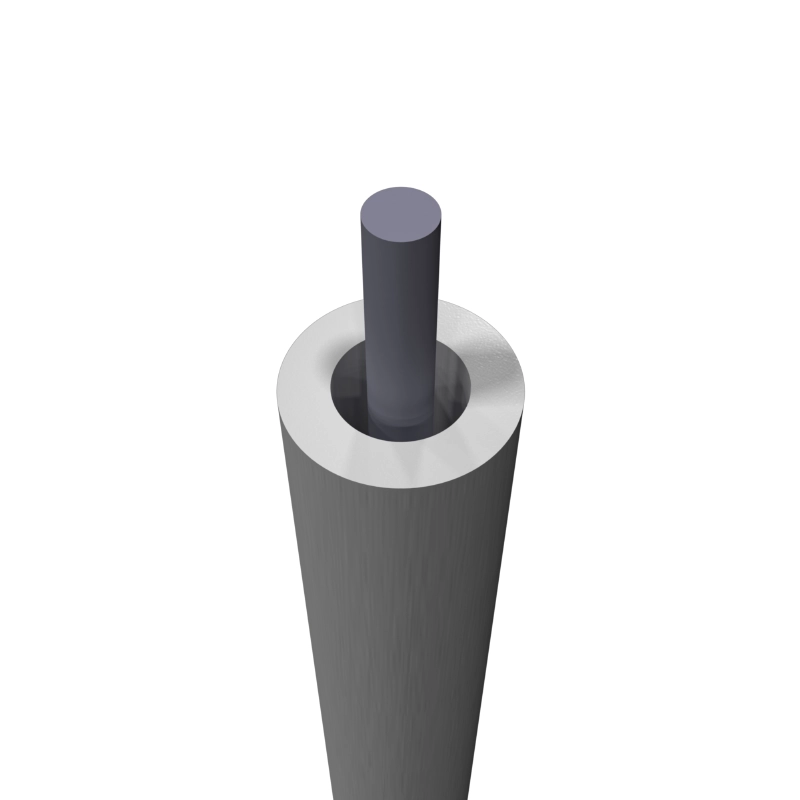
The core of the Harp Rack’s protective capability lies in its unique divider system. Each robust steel divider is fully encased in a soft, non-abrasive PVC casing. This design ensures two things: first, the steel core provides the rigidity to securely separate heavy glass lites. Second, the PVC sleeve creates a gentle, cushioned contact point that completely prevents glass-on-glass or glass-on-steel contact, safeguarding surfaces from scratches and edges from impact. Each lite is held securely in its own protected bay.
After: Plummeting Scrap Rates and Assured Quality
By isolating every piece of glass, the harp racks for sorting glass units eliminate the vibrations and impacts that cause hidden damage. The result is a dramatic reduction in your scrap rate, especially for thin or coated glass. Fewer units fail quality control, more finished products ship out the door, and your bottom line is directly improved by minimizing material waste and costly remakes.
From Static Obstacle to Dynamic Asset: The Power of a Mobile WIP Buffer
Before: The Workshop Roadblock
Large, stationary A-frames and L-frames are designed for bulk warehousing, not for the dynamic environment of a production floor. They become immovable obstacles, forcing inefficient workflows and requiring multiple handling steps. Glass has to be manually unloaded from the cutting table, moved to the static rack, then unloaded again onto a cart to be taken to the washing machine. Each touch point is a risk for injury and product damage.
Why It Works: A Fluid, In-Plant Transfer Solution
The Harp Rack is engineered for mobility. As a harp rack glass trolley equipped with heavy-duty polyurethane casters, it functions as a dynamic WIP buffer. A single rack can be loaded directly at the CNC cutting table, rolled to the washing station, and then positioned right beside the IGU assembly line. This creates a seamless, single-handling workflow. For ultimate safety, the foot-actuated lifting mechanism locks the rack firmly in place, preventing any movement during loading and unloading, ensuring both operator safety and the protection of the glass.

After: A Streamlined, Safer, and More Productive Floor
By integrating mobile Harp Racks, you drastically reduce the number of “touches” per lite. This minimizes the opportunities for damage, reduces physical strain on your team, and clears up valuable floor space. The entire production cycle shortens, allowing your facility to process more jobs with greater efficiency and a higher degree of safety.
Frequently Asked Questions
1. What is the ideal slot spacing for handling the thin lites used in IGU production?
Our Harp Racks are highly customizable. While standard models are available, we can tailor the slot width to precisely match your most commonly used glass thicknesses, such as 1/4″ (6mm). This snug fit is crucial for eliminating wobble and preventing micro-fractures during movement.
2. Can a Harp Rack support the large, heavy lites required for architectural IGUs?
Absolutely. The frame is constructed from high-strength Q235A Carbon Steel and features a full welding process for maximum structural integrity. Standard models typically have a dynamic load capacity of 3,300 lbs (1500 kg), with heavy-duty custom options available for even larger demands.
3. How does the Harp Rack design protect expensive coated glass like Low-E?
The primary protective feature is the soft PVC casing that covers every steel divider rod. This non-abrasive surface ensures that the delicate metallic coating on Low-E glass is never scratched or damaged during loading, transport, or unloading.
4. Is the Harp Rack difficult to assemble on-site?
No, it’s designed for straightforward assembly. The rack ships in a knock-down, flat-pack format to significantly reduce freight costs. The main components (base, uprights, and divider grid) are assembled on-site using a simple, robust bolted connection system.
5. How is a Harp Rack fundamentally different from a standard A-Frame rack?
An A-Frame is a tool for bulk storage and transport, ideal for holding large quantities of same-sized stock sheets. A Harp Rack is a specialized processing and sorting tool. Its high-density, individually separated slots are designed for organizing, pairing, and staging unique lites within a dynamic production workflow, making it an active part of the manufacturing process, not just passive storage.
GET IN TOUCH
Please Don’t Hesitate If You Have Any Questions Or Special Requirements Fill In The Form Below!
Request a Factory-Direct Price Quote
Get customized CAD drawings, dynamic loading calculations, and wholesale price quotes. Response within 12 hours.