
 EN
 DE
 RU
 FR
 PT
 ES
 IT
 JA


Every scratch on a Low-E coated or tempered glass lite during in-plant transfer isn’t just a defect—it’s a direct hit to your job’s profitability. It means a costly recut, a production bottleneck between your CNC table and tempering furnace, and another handling risk for your team. What if you could eliminate this friction and protect every single piece of glass moving through your facility?
The Real Culprits Behind In-Transit Glass Damage
In a busy glass fabrication facility, moving lites from the CNC Glass Cutting Table to the edging machine or the tempering furnace is a constant, high-stakes process. Standard carts or A-frames, while useful for bulk storage, often become the source of costly damage during these critical in-plant transfers. The root causes are simple but destructive.
Vibration & Glass-on-Glass Contact
On a generic trolley, even with padding, glass lites are rarely held completely separate. As the cart moves across the workshop floor, vibrations cause the lites to shift, slap against each other, and chatter against the frame. This constant micro-impact is a primary cause of chipped edges and subtle surface scratches that can lead to a full rejection at the final quality check.
Inadequate Surface Protection
The most expensive damage often comes from direct contact with the rack itself. Bare metal or hard, unforgiving plastic surfaces can easily scratch delicate coatings on high-value products like Low-E glass or custom shower glass doors. A single drag across the wrong surface can ruin a lite, forcing a complete recut and disrupting your production schedule.
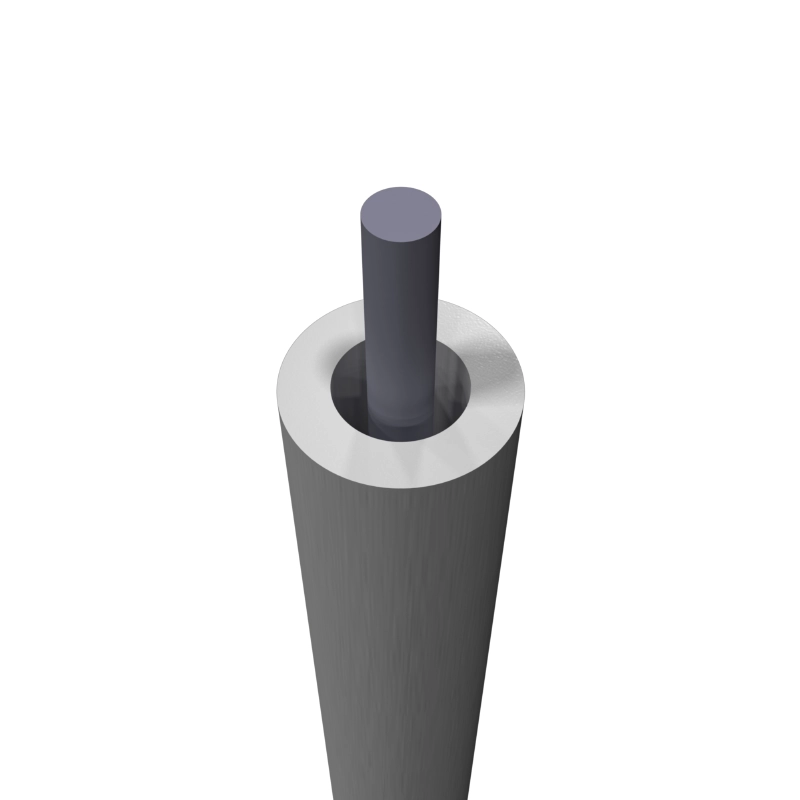
Engineered Protection: How a Harp Rack Isolates and Secures Each Lite
A purpose-built Harp Rack is designed from the ground up to solve these specific problems. It acts as a mobile Work-in-Progress (WIP) buffer station that doesn’t just hold glass, but actively protects it at every point of contact.
Individual Slots with PVC-Coated Steel Dividers
The core of the Harp Rack’s defense system is its series of vertical dividers. Each divider has a high-tensile steel core for rigidity, but it’s fully encased in a thick, soft PVC casing. This design creates a series of individual, cushioned slots.
- Before: Glass lites lean against each other, with only their edges touching, creating pressure points and scratch risks.
- Why It Works: The PVC-coated dividers ensure there is absolutely no glass-on-glass or glass-on-metal contact. Each lite is suspended in its own protective cocoon, isolating it from external vibrations and impacts.
- After: High-value coated glass and polished lites arrive at the next station in the exact same pristine condition they left the last one, drastically reducing your scrap rate from handling damage.
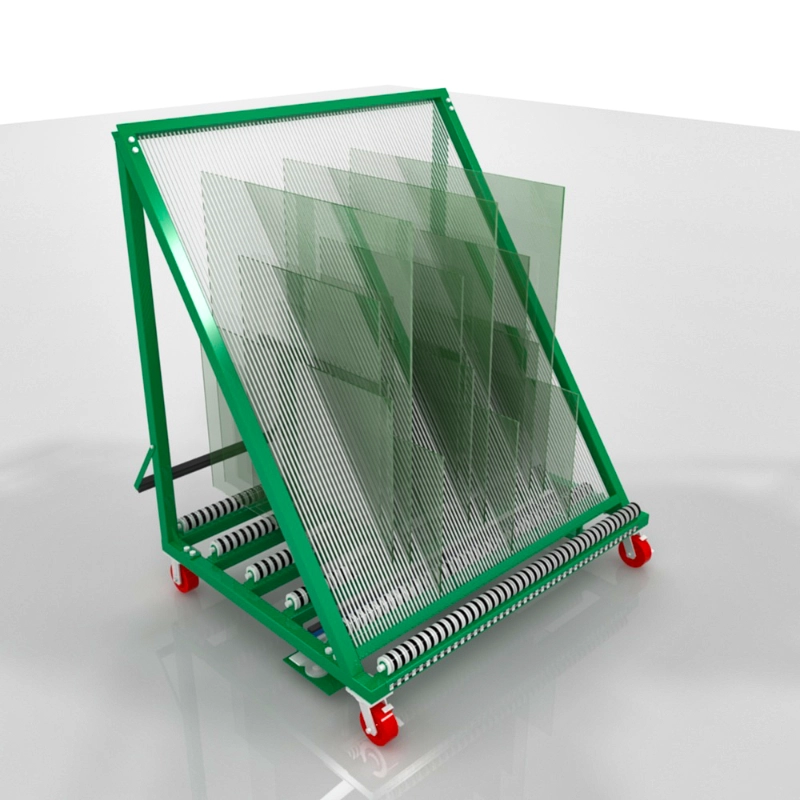
Secure Base: Nylon Rollers or a Slotted Full Base
How the glass is supported at the bottom is just as critical. A Harp Rack for glass offers two specialized solutions:
- Nylon Rollers: For heavy lites like laminated or insulated glass units, a base with nylon rollers allows operators to effortlessly slide the glass into place without jarring or chipping the bottom edge.
- Full Steel Base with Slots: This is the ultimate solution for thin glass (e.g., 6mm) or non-standard, narrow pieces. Traditional rollers can cause thin lites to wobble and risk micro-cracks. The full base provides continuous support along the entire bottom edge, with custom-width slots holding the lite perfectly upright and stable.

From Stationary to Mobile Without a Single Jolt
Preventing scratches isn’t just about soft surfaces; it’s about eliminating all uncontrolled movement during transport. The most significant risk of damage occurs when a cart is bumped, starts, or stops suddenly, causing the entire load to shift. This is where an active locking system becomes essential.
Our Harp Racks feature a unique foot-actuated lifting mechanism. Before moving the rack, an operator simply steps on a pedal. This engages a lever system that slightly lifts the glass off the base rollers and presses the entire load securely against a fixed industrial rubber buffer strip. The glass is completely immobilized, unable to slide, shift, or vibrate, no matter how rough the journey across the plant floor is. This not only protects the glass but also dramatically increases operator safety.

By investing in a transport solution engineered specifically for the realities of glass fabrication, you’re not just buying a rack. You’re eliminating a major source of waste, protecting your most valuable products, and creating a safer, more efficient workflow from start to finish.
Frequently Asked Questions
| How does a harp rack specifically protect coated glass like Low-E? |
| The primary protection comes from the PVC-coated steel dividers. The soft, non-abrasive PVC casing ensures that the delicate metallic coating on Low-E glass never makes contact with hard metal or another piece of glass, preventing scratches and preserving the integrity of the coating. |
| Can it handle thin glass, like 1/4 inch (6mm), without it wobbling and breaking? |
| Absolutely. For this exact application, we recommend the full base harp racks. Instead of rollers, this model features a solid base with CNC-cut slots. We can customize the slot width to be just slightly wider than your glass thickness, providing tight, secure support that completely eliminates wobble and the risk of stress-induced micro-cracks during transport. |
| What is the typical load capacity of these transport racks? |
| Our standard harp racks for sorting glass units are built from heavy-duty Q235A carbon steel and typically have a dynamic load capacity of around 3,300 lbs (1500 kg). For operations dealing with exceptionally large or heavy lites, we can engineer custom solutions with higher capacities. |
| How does the locking mechanism work to secure the glass? |
| It’s a simple and robust foot-actuated lifting mechanism. When you press the pedal, it engages a lever that lifts the entire payload slightly, pressing it firmly against a rubber buffer bar at the back of the rack. This immobilizes all the glass sheets, preventing any forward or backward shifting while the rack is being moved. |
| Are these racks shipped fully assembled, and how does that affect freight costs? |
| To save our customers significantly on shipping, our racks are designed with a knock-down bolted assembly. They are shipped flat-packed, which drastically reduces the shipping volume. This is especially beneficial for international container loading, allowing more units to fit in a single container and lowering overall logistics costs. Assembly on-site is straightforward with standard tools.
|

GET IN TOUCH
Please Don’t Hesitate If You Have Any Questions Or Special Requirements Fill In The Form Below!
Request a Factory-Direct Price Quote
Get customized CAD drawings, dynamic loading calculations, and wholesale price quotes. Response within 12 hours.