
 EN
 DE
 RU
 FR
 PT
 ES
 IT
 JA


Your CNC glass cutting table is running at full capacity, but your workshop floor is a bottleneck. Finished lites are piling up, waiting for the tempering furnace or the IGU assembly line. Traditional A-frames are eating up valuable square footage, making it a nightmare to sort and pair units for the next process. This isn’t just a space issue—it’s a direct hit to your production flow and profitability.
Beyond Simple Storage: Calculating the True Footprint of Your Glass WIP
In any busy glass fabrication facility, floor space is a premium asset. When we measure storage efficiency, it’s a mistake to only consider the physical footprint of a rack. The real cost of space includes the “dead zones” required for maneuvering, the staging areas for sorting, and the quarantine space for damaged lites. Traditional A-Frame racks, while excellent for bulk storage of raw sheets, become highly inefficient for managing Work-in-Progress (WIP).
Consider the typical workflow for producing insulated glass units (IGUs). Lites come off the cutting table and need to be sorted and paired (“组队”) before moving to the washing and assembly line. With A-frames, this often means operators have to unload multiple large lites to access one specific piece, spreading them precariously across the workshop. This process not only consumes a massive amount of floor space but also dramatically increases the risk of scratches, edge chipping, and worker injury.
How a Harp Rack Reclaims Your Production Floor
A harp rack for glass fundamentally changes the space-saving equation by combining high-density storage, instant access, and mobility into a single, compact unit. It’s not just a rack; it’s a strategic tool for optimizing your plant’s material flow.
High-Density Vertical Storage: The Core Principle
The primary advantage of a glass harp rack is its ability to store a large number of individual glass lites vertically in a very small footprint. Each lite occupies its own slot, separated by protective dividers. For example, our standard HR-84 model, with a footprint of roughly 59″ x 47″, can securely hold up to 84 individual lites of thin glass. To stage that many lites for sorting using conventional methods would require an area several times larger, creating chaos on the production floor.

Consolidating Processes: The Mobile WIP Buffer Station
True space saving comes from streamlining your workflow. A harp rack is a mobile in-plant transfer cart that eliminates the need for separate storage and transport equipment. Instead of a multi-step process (cut -> move to static rack -> pick for sorting -> move to transport cart -> move to next station), the workflow becomes seamless:
- Load sorted lites directly from the CNC Glass Cutting Table onto the harp rack.
- Roll the entire, organized batch to the glass washing machine or the tempering furnace loading area.
- The rack acts as a mobile buffer, feeding the next process directly.
This consolidation removes multiple handling steps and eliminates the cluttered intermediate staging areas, freeing up critical square footage for production, not just storage.

Space Saving Isn’t Just Square Footage—It’s Reducing Waste
An often-overlooked aspect of space consumption is the area dedicated to scrap and remakes. Every square foot occupied by a rejected lite is wasted space. A harp rack saves this “waste space” by providing superior protection for your high-value glass during storage and transfer.
Protecting High-Value Lites from Damage
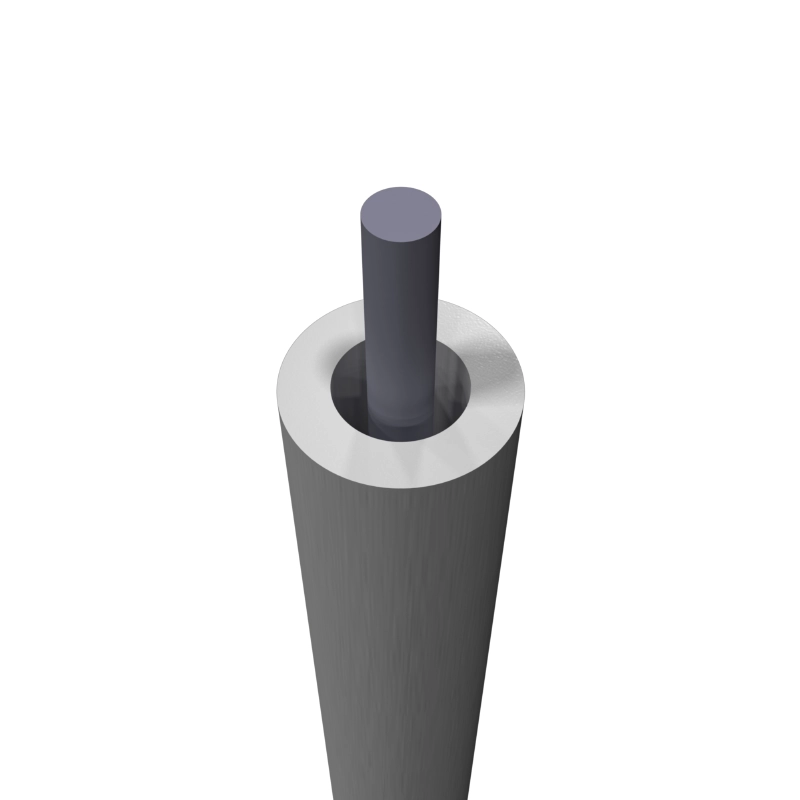
The dividers in our harp racks are not just bare steel rods. They are constructed with a strong steel core overmolded with a soft, durable PVC casing. This design provides the rigidity needed to separate heavy lites while offering a non-abrasive surface that prevents scratches, especially on sensitive materials like Low-E coated glass. By minimizing contact and impact, you reduce the rate of rejection, which in turn reduces the space and resources wasted on producing replacements.
Solving the Unstable Load Problem for Thin & Non-Standard Glass
Glass fabricators often struggle with storing thin lites (e.g., 1/4″) or non-standard, high-and-narrow pieces. In traditional racks with wide slots or rollers, these lites can wobble and vibrate during movement, leading to hidden micro-cracks that cause failure during tempering or after installation. Our full base harp racks solve this problem with a slotted steel base that provides continuous, edge-to-edge support. This design completely eliminates instability, protecting the integrity of the glass and saving the “space” that would have been lost to scrapped material.

Quantifying the Savings: A Practical Comparison
The difference becomes clear when you compare the solutions side-by-side in a typical glass processing environment.
| Metric | Traditional A-Frame Rack | Harp Rack for Glass |
|---|---|---|
| Floor Space Efficiency | Low. Requires large footprint plus significant maneuvering and staging area. | High. Maximizes vertical storage in a compact, mobile footprint. |
| Access for Sorting Glass Units | Poor. Requires moving multiple lites to access a single piece. | Excellent. Every lite is individually accessible in its own slot. |
| Workflow Integration | Static. Acts as a standalone storage island, creating handling bottlenecks. | Dynamic. Functions as a mobile WIP station, connecting processes seamlessly. |
| Material Protection | Basic. Risk of glass-on-glass contact, scratches, and instability for thin lites. | Superior. PVC-coated dividers and specialized bases prevent damage and reduce scrap. |
Ultimately, the space a harp rack saves is multi-dimensional. It’s the physical square footage you reclaim on your floor, the time and motion you save by creating a fluid workflow, and the financial and material “space” you gain by drastically reducing product damage and remakes. It’s an investment in transforming your workshop from a congested storage area into a high-efficiency production line.
Frequently Asked Questions
1. How does a harp rack compare to an A-frame rack for storage density?
For storing a large number of individual, separated glass lites, a harp rack offers significantly higher density. While an A-frame is built for bulk capacity of stacked sheets, a harp rack is designed to maximize the number of accessible, individual lites within a minimal footprint, making it far superior for WIP and sorting applications.
2. Can your harp racks handle heavy laminated or insulated glass units (IGUs)?
Absolutely. Our harp racks are built from high-strength Q235A Carbon Steel with a full welding process to ensure structural integrity. They are equipped with heavy-duty polyurethane casters and are designed to handle dynamic loads of 1500 kg (approx. 3300 lbs) or more, making them perfectly suitable for heavy laminated glass and multi-lite IGUs.
3. We process a lot of thin glass (1/4″). Will it be secure during in-plant transfer?
Yes, this is a key problem we solve. We offer models with a full steel base with custom-width slots. This provides continuous support along the bottom edge of the thin glass, preventing the wobbling and vibration that cause micro-cracks in other racks. For ultimate security, our foot-actuated lifting mechanism locks the entire load against a rubber buffer during transport.
4. Our workshop floor is tight. How maneuverable are these racks when fully loaded?
They are designed for maneuverability in busy workshops. The standard configuration includes two fixed and two braking swivel casters, allowing for precise steering. The integrated push handles provide ergonomic control, and for fully loaded racks, forklift entrances are built into the base for safe and easy mechanical transport.
5. How does the knock-down bolted assembly design help with shipping and installation?
The knock-down design allows the rack to be shipped flat-packed, which drastically reduces the shipping volume and cost, especially for international container loading. On-site, this modular design makes it easier to move components into facilities with tight access and simplifies assembly with standard bolts, getting you up and running faster.
GET IN TOUCH
Please Don’t Hesitate If You Have Any Questions Or Special Requirements Fill In The Form Below!
Request a Factory-Direct Price Quote
Get customized CAD drawings, dynamic loading calculations, and wholesale price quotes. Response within 12 hours.