
 EN
 DE
 RU
 FR
 PT
 ES
 IT
 JA


Your tempering furnace doesn’t wait. Your CNC cutting table keeps feeding the line. But the chaotic journey between them—using wobbly A-frames or risky manual carries—is where profit bleeds out through chipped edges, scratched coatings, and dangerous near-misses. This isn’t just a storage issue; it’s a critical breakdown in your workflow that directly impacts safety and your bottom line.
Harp racks glass industry safety standards?
In the glass fabrication industry, “safety standards” aren’t just about compliance checklists; they’re about the physical realities of moving thousands of pounds of fragile, high-value material across a busy shop floor every single day. A standard that looks good on paper can fail spectacularly between the glass cutting line and the tempering furnace. The real question isn’t whether a piece of equipment meets a generic standard, but whether it fundamentally re-engineers your process to eliminate inherent risks. This is where the Harp Rack moves beyond simple storage and becomes an active safety system.
The Real-World Failures of “Standard” Glass Handling
For any experienced plant manager, the daily safety risks are predictable and costly. Traditional methods of in-plant transfer for glass lites are fraught with problems that directly threaten both personnel and product.
- Vibration & Micro-Fractures: Pushing a standard cart over an uneven concrete floor introduces constant vibration. For thin glass (e.g., 1/4″ or 6mm) or freshly tempered sheets, this can create invisible micro-cracks that lead to unexpected breakage later in production or, worse, after installation.
- The Unstable Load: A-Frames are great for bulk storage, but for moving mixed or odd-sized loads, they are inefficient. A single, tall, narrow piece of custom shower glass can be dangerously unstable, relying on operator skill alone to prevent a catastrophic tip-over.
- Surface Damage is a Profit Killer: When handling expensive Low-E or other coated glass, every point of contact is a risk. A slight shift during transport can cause a permanent scratch, rendering a costly piece of architectural glass useless.
- The Ergonomic Nightmare: The physical strain of loading and unloading heavy, awkward lites of laminated glass leads to back injuries and lacerations—the most common and costly workers’ compensation claims in the industry.
Beyond Brakes: Engineering Active Stability and Protection
A harp rack glass trolley isn’t just an A-Frame with more slots. Its design directly confronts these specific failure points with integrated engineering solutions. It’s not just about preventing movement; it’s about creating a secure, mobile cell for your work-in-progress (WIP).
The Foot-Actuated Locking Mechanism: A Non-Negotiable Safety Feature
Standard caster brakes only prevent the wheels from rolling. They do nothing to stop the entire rack from shifting or vibrating as a 200 Lbs lite is loaded. Our Harp Rack features a Foot-Actuated Lifting Mechanism. When engaged, it lifts the casters slightly off the floor, planting the rack’s frame firmly on the ground. This creates an absolutely stable workstation, eliminating the dangerous “creep” and wobble during loading and unloading. This single feature transforms the rack from a passive cart into an active safety device, crucial when handling heavy laminated glass.

The foot-actuated mechanism provides total immobility, a critical safety upgrade from simple caster brakes.
PVC-Coated Dividers: Protecting High-Value Surfaces
Every slot in a Harp Rack is separated by a robust steel wire core coated in a thick, soft PVC casing. This design provides the rigidity to separate heavy glass sheets while ensuring the only thing touching your valuable coated surfaces is a soft, non-abrasive polymer. This isn’t just a feature; it’s insurance against scratches and remakes, directly protecting your profit margins on every job.
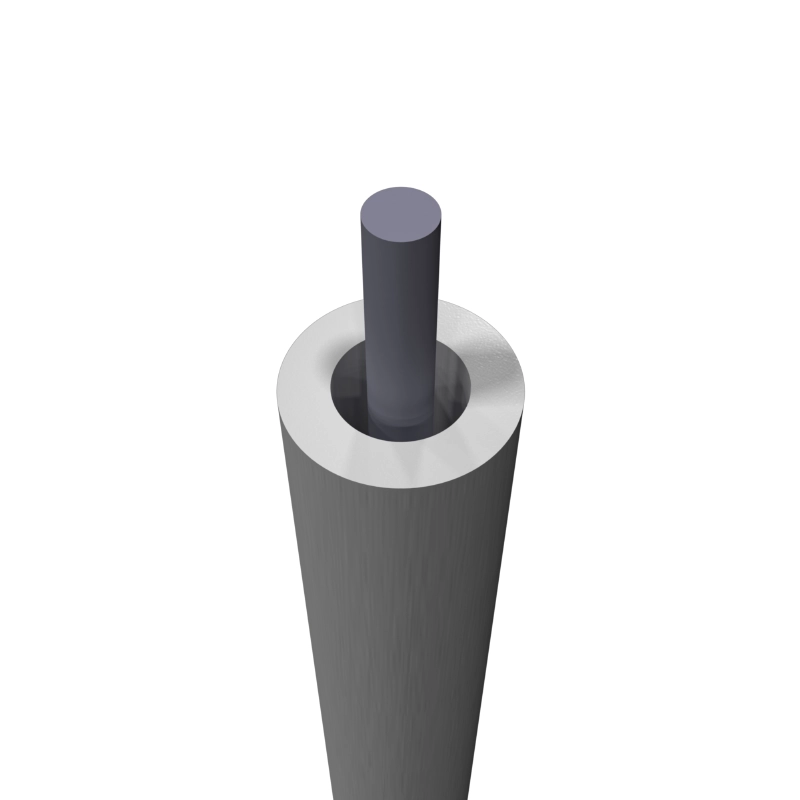
The composite structure of steel core and PVC casing ensures both strength and surface protection.
High-Density Sorting: Streamlining IGU Production
The process of “pairing up” lites for an Insulated Glass Unit (IGU) can create a major bottleneck. Harp Racks excel as mobile sorting stations. With numbered slots, operators can organize and stage matched pairs directly from the cutting or washing line. The entire, organized batch can then be safely wheeled to the IGU assembly line, drastically reducing handling time and the risk of mix-ups. This is a lean manufacturing principle applied directly to glass fabrication.

Numbered slots enable precise sorting glass units, accelerating IGU assembly workflows.
The Bottom Line: From Cost Center to Profit Driver
Elevating your facility’s safety standards with Harp Racks isn’t an expense; it’s a direct investment in operational excellence. The benefits are tangible and measurable:
| Operational Area | Before Harp Rack (The Hidden Costs) | After Harp Rack (The ROI) |
|---|---|---|
| Material Waste | High scrap rate due to scratches, chipped edges, and transport-induced breakage. | Drastically reduced material loss, especially on high-value coated and laminated glass. |
| Worker Safety | Constant risk of strains, sprains, and lacerations from unstable loads and manual handling. | Reduced injury risk and potential for lower insurance premiums due to engineered stability and safer handling protocols. |
| Production Flow | Bottlenecks between processes; time wasted searching for and matching lites for assembly. | Smooth, continuous flow of materials. Pre-sorted WIP buffer stations feed assembly lines efficiently, increasing throughput. |
| Shipping & Logistics | High freight costs for bulky, welded racks. | Significantly lower shipping costs due to knock-down, flat-pack design, especially for international container loading. |

The knock-down design dramatically reduces freight volume and cost.
True safety in the glass industry is proactive, not reactive. It’s built into the tools your team uses every hour. By addressing the root causes of accidents and material damage, the Harp Rack doesn’t just meet a standard—it sets a new one for your entire operation.
Frequently Asked Questions
1. How does a harp rack prevent scratches on coated glass like Low-E?
The dividers are made of a strong steel core overmolded with a thick, soft PVC (Polyvinyl Chloride) casing. This ensures that the glass surface only ever makes contact with a non-abrasive, forgiving material, effectively preventing scratches and scuffs on sensitive coatings during storage and transport.
2. What is the load capacity of a standard harp rack? Can it handle heavy laminated glass?
Our standard models, like the HR-40, are engineered with a dynamic load capacity of 1500 kg (approximately 3300 Lbs). The frame is constructed from high-strength Q235A Carbon Steel with full welding to easily support the weight of multiple, heavy lites of laminated or thick tempered glass.
3. Our shop handles non-standard, narrow glass lites. Will they be stable in a harp rack?
Absolutely. This is a common problem our racks solve. We offer a “full base harp rack” option with a slotted steel or HDPE base. Unlike racks with rollers, this design provides continuous support along the entire bottom edge of the glass, regardless of its width, ensuring even very narrow or oddly shaped lites remain stable and secure.
4. How does the foot-locking mechanism improve safety over a standard caster brake?
A caster brake only stops the wheel from turning, but the rack can still pivot or wobble on the caster’s swivel bearing. Our foot-actuated lifting mechanism physically lifts the rack, planting the frame firmly on the ground. This creates a completely immobile and stable platform, preventing any movement—rolling, swiveling, or shifting—during the critical and high-risk moments of loading and unloading heavy glass.
5. Are these racks shipped assembled? What is the process for international shipping?
No, and that is a key advantage. Our Harp Racks feature a knock-down, bolted assembly design. They are shipped flat-packed, which drastically reduces the shipping volume. This significantly lowers freight costs, especially for international container loading, and makes it easier to move the components into your facility for on-site assembly.
GET IN TOUCH
Please Don’t Hesitate If You Have Any Questions Or Special Requirements Fill In The Form Below!
Request a Factory-Direct Price Quote
Get customized CAD drawings, dynamic loading calculations, and wholesale price quotes. Response within 12 hours.