
 EN
 DE
 RU
 FR
 PT
 ES
 IT
 JA


Your IGU assembly line is waiting. But back at the cutting table, operators are still trying to find and match the right lites from a crowded A-frame. Every minute spent searching is a production bottleneck. Every lite leaned against another risks a costly scratch on a Low-E coating, forcing a complete remake. It’s time to stop staging and start sorting with a system designed for your workflow.
For any Insulated Glass Unit (IGU) manufacturer, the question isn’t if you need to sort glass lites, but how you can do it without killing your efficiency and profit margins. The journey from the CNC cutting table to the IGU assembly line is fraught with risks: mismatched pairs, handling damage, and workflow stoppages. So, are harp racks for sorting glass units the definitive solution? Absolutely. They are not just storage; they are a critical process tool.
The High Cost of Disorganized IGU Pairing
Walk through a typical glass fabrication shop and you’ll often see the pre-assembly chaos. Freshly cut lites are staged on oversized A-frames or L-racks. When it’s time for “pairing,” an operator manually hunts for the matching components for an IGU. This traditional method is a direct drain on your resources.
The key pain points are immediate and costly:
- Production Line Starvation: Your expensive IGU production line sits idle while operators search for the correct glass, directly impacting your throughput.
- Damage to High-Value Coatings: Every time a lite is moved to find the one behind it, you risk scratching delicate Low-E or other performance coatings. A single deep scratch means the entire unit is scrap.
- Breakage Risk: Handling thin lites (e.g., 1/4″ or 6mm) without proper support is a recipe for micro-cracks or complete breakage, especially during in-plant transfer.
- Wasted Labor: Your skilled operators are spending valuable time on a low-value task—shuffling glass—instead of running production machinery.

This disorganized workflow creates a persistent bottleneck that prevents your facility from reaching its true production capacity.
The Harp Rack: Your Mobile WIP Station for Flawless Sorting
A Harp Rack, or harp rack glass trolley, transforms your sorting process from a liability into a streamlined asset. It’s purpose-built to function as a mobile Work-in-Progress (WIP) buffer station, integrating seamlessly between your processing stages.
Slot-by-Slot Precision for Perfect Pairing
The core design of a Harp Rack is its series of high-density vertical slots. Each glass lite is given its own dedicated, protected space. This eliminates the need to shuffle panels. For IGU production, this is a game-changer. Operators can load paired lites in sequential slots, or use the clearly marked numbering system to instantly identify and retrieve matched sets, ensuring the right components arrive at the assembly line every time.

Protecting High-Value Lites from Costly Damage
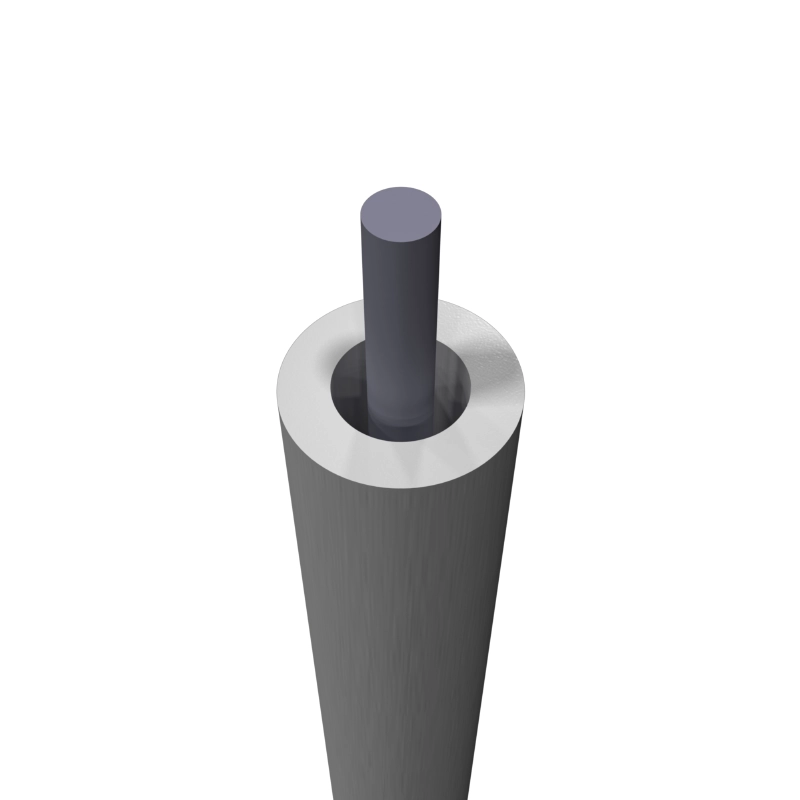
The dividers are more than just separators. They are engineered with a solid steel core for rigidity, fully encased in a soft, non-abrasive PVC casing. This composite structure provides robust support while creating a gentle contact surface that cannot scratch or chip the glass. For a fabricator working with expensive Low-E glass, this feature is non-negotiable. It provides peace of mind that your materials are protected from the moment they are cut to the moment they are assembled.
Bridging the Gap Between Cutting and Assembly
The Harp Rack isn’t a static piece of equipment. Equipped with heavy-duty polyurethane casters, it’s a mobile unit that connects your entire workflow. Load it directly at the CNC cutting table, roll the entire sorted batch to the washing station, and then move it to the IGU line. This single-touch system drastically reduces manual handling. For ultimate safety during transit, the foot-actuated lifting mechanism locks the rack firmly in place, preventing any movement or vibration that could damage the glass.

The Bottom-Line Impact: Reduced Scrap, Increased Throughput
Integrating Harp Racks into your IGU production is not just an operational upgrade; it’s a direct investment in your profitability. The benefits are clear, measurable, and address the most critical challenges in glass fabrication.

| Challenge in IGU Production | Harp Rack Solution | Business Outcome |
|---|---|---|
| Time-consuming manual search for matched lites. | Numbered, individual slots for pre-sorting and easy identification. | Increased Throughput: Dramatically reduces pairing time, keeping the IGU line fed and operational. |
| Scratches on expensive Low-E coatings from handling and improper storage. | Soft PVC-coated steel dividers prevent any glass-to-glass or glass-to-metal contact. | Reduced Scrap Rate: Virtually eliminates handling-related surface damage, saving thousands in material costs. |
| Production bottlenecks and workflow interruptions between departments. | Mobile design acts as a WIP cart, creating a fluid transfer from cutting to assembly. | Enhanced Efficiency: Creates a smooth, predictable production flow and eliminates idle time at key stations. |
| High risk of worker injury and glass breakage during manual transport. | Heavy-duty casters and a foot-actuated locking mechanism ensure stable and secure movement. | Improved Safety: Minimizes manual lifting and carrying of heavy lites, creating a safer work environment. |
Frequently Asked Questions
1. Can these racks handle the thin glass often used in triple-pane IGUs?
Yes. Unlike standard racks with fixed spacing, our Harp Racks can be customized with narrower slot widths (e.g., 8-10mm). This provides a snug, secure fit for thin glass lites, preventing the wobbling that leads to micro-cracks and breakage during transport.
2. How do the PVC-coated dividers hold up in a demanding fabrication environment?
The PVC casing is an industrial-grade material selected for its durability and resilience. It is designed to withstand the daily rigors of a production floor, resisting abrasion and impact while providing consistent protection for your glass for years of service.
3. Is assembly difficult on-site?
No. The racks are engineered with a knock-down, bolted assembly structure. They ship flat-packed to save on freight costs and can be assembled on-site with standard tools. This modular design also allows for easy replacement of individual components if ever needed.
4. What is the load capacity? We process large architectural glass.
Standard models, like our HR-40, have a dynamic load capacity of 1500 kg (approx. 3,300 lbs). We also offer heavy-duty and custom-sized models with capacities exceeding 2500 kg (5,500 lbs) to safely handle the large, heavy lites common in commercial building and architectural glass projects.
5. How is a Harp Rack fundamentally different from our A-Frame racks for IGU production?
Think of it as function-specific tooling. An A-Frame is a “warehouse,” excellent for bulk storage of raw sheets or finished crates. A Harp Rack is a “workbench on wheels,” specifically designed for the dynamic processes of sorting, pairing, and transferring individual lites within your production workflow. It’s the tool that bridges the gap between bulk storage and final assembly.
GET IN TOUCH
Please Don’t Hesitate If You Have Any Questions Or Special Requirements Fill In The Form Below!
Request a Factory-Direct Price Quote
Get customized CAD drawings, dynamic loading calculations, and wholesale price quotes. Response within 12 hours.