
 EN
 DE
 RU
 FR
 PT
 ES
 IT
 JA


A frayed or broken divider on your harp rack is more than a maintenance headache—it’s a direct threat to your high-value glass lites. Before you price a simple replacement “support cord,” consider the real cost of a single scratched Low-E panel or a chipped tempered lite getting rejected at the final inspection. That’s a cost that goes straight to your bottom line.
Understanding the True Cost Beyond the “Support Cord”
You’re searching for the cost of a harp rack replacement support cord, and that’s a smart, proactive step. It means you’re focused on equipment uptime and safety. However, in the world of glass fabrication, focusing solely on the price of a single component can mask a much larger financial risk. The industry term for these “cords” is PVC-Coated Steel Dividers, and their quality is the last line of defense for your most valuable assets: the glass lites moving through your production floor.
Let’s reframe the question from “What’s the cost to replace a cord?” to “What’s the cost of a divider failure?” The answer involves scrap rates, production delays, and compromised quality—all of which dwarf the cost of a premium component.
The Scenario: How a “Cheap” Divider Scraps a High-Value Lite
The Pain Point (Before): Your operator is moving a rack of freshly cut Low-E glass from the CNC cutting table to the washing machine. An old divider, worn from use, has an exposed steel core. As a lite is loaded, its delicate coating makes contact with the exposed metal, creating a deep, irreparable scratch. That entire piece, destined for a high-profile architectural IGU (Insulated Glass Unit), is now scrap. The entire “組隊” (kitting) process is halted, delaying a critical order and impacting your production schedule.
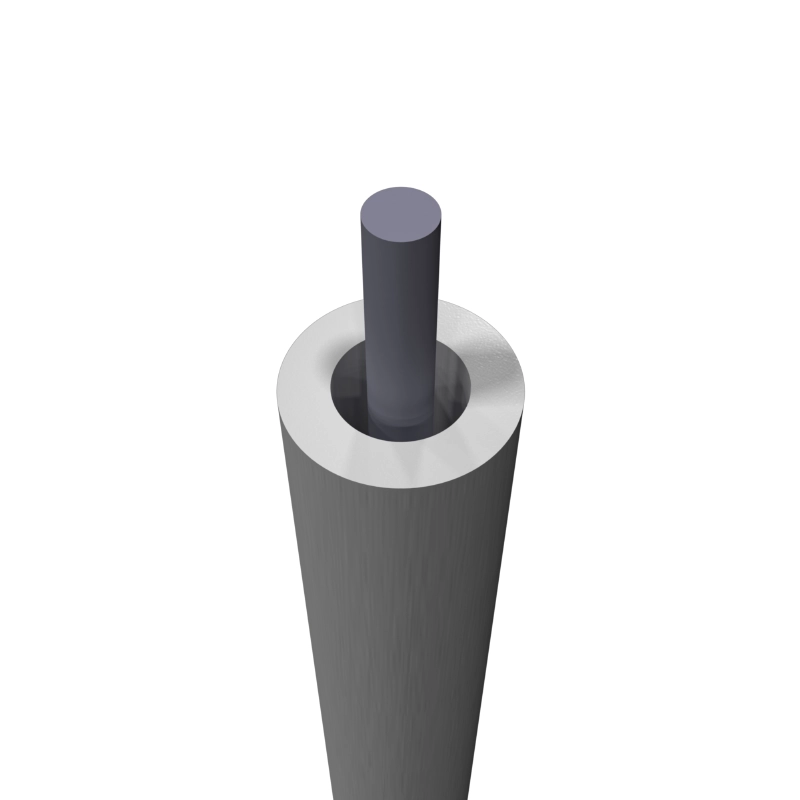
The Engineered Solution (Why It Works): Our dividers are not simple plastic rods. They are a composite system engineered specifically for high-value glass. Each divider features a high-tensile solid steel core that provides the rigidity needed to separate heavy glass lites without flexing. This core is then encased in a thick, durable, and flexible PVC casing. This outer layer acts as a shock-absorbing, non-abrasive cushion, ensuring that even the most sensitive coatings are protected from contact, friction, and impact during in-plant transfer.
The Result (After): By investing in a system with properly engineered dividers, the risk of surface damage is virtually eliminated. Your scrap rate on high-margin products like coated or custom tempered glass plummets. This directly protects your profitability and solidifies your reputation for delivering flawless products on time.
It’s Not the Cord, It’s the System: Preventing Failure Before It Happens
Frequent divider wear is often a symptom of a larger problem: a poorly designed rack that allows excessive vibration and movement during transport. This not only damages the dividers but can also cause invisible but catastrophic micro-fractures in the glass itself.
The Pain Point (Before): A full glass harp rack is pushed across the uneven concrete floor of the workshop. The glass lites rattle and shift in their slots, causing constant friction against the dividers and inducing stress in the glass. This is especially damaging for thin lites (e.g., 1/4″ or 6mm) intended for IGU manufacturing.

The Engineered Solution (Why It Works): A superior harp rack is more than its frame and dividers; it’s an integrated transport system. Our racks are built from a robust Q235A Carbon Steel frame with a full welding process for maximum rigidity. Critically, they feature a Foot-Actuated Lifting Mechanism. Before moving, the operator steps on a pedal that slightly lifts the entire load, locking it securely against fixed rubber buffers. This simple action completely immobilizes the glass, eliminating the chatter, vibration, and shock that cause damage to both the product and the equipment during transit.
The Result (After): Transport becomes smooth and secure. The lifespan of your dividers is significantly extended because they are no longer subjected to constant abrasive motion. More importantly, the integrity of your glass is preserved, ensuring higher yields at the tempering furnace and preventing costly failures down the line. You’re no longer just moving glass; you’re protecting your work-in-progress (WIP) at every stage.
From Spare Part Pricing to Long-Term ROI
So, what is the cost of a replacement support cord? The direct answer is that we provide components as part of a complete, engineered solution. Our racks are designed with a Knock-Down Bolted Assembly, meaning that while individual sections can be replaced if sustaining severe damage, they are designed to work in concert for maximum durability.

The true “cost” should be evaluated as a long-term investment. By choosing a robust, well-designed harp rack for glass, you are investing in:
- Reduced Material Waste: Fewer scratches, chips, and micro-fractures.
- Increased Operational Efficiency: Smoother, safer workflow between processing stations.
- Enhanced Worker Safety: Stable, secure loads that prevent accidents.
- Lower Maintenance Overhead: Durable components that last longer and require less frequent replacement.
Instead of a quick fix for a failing part, consider an upgrade to a system that prevents failure in the first place. Contact our experts to discuss your specific application—whether you’re sorting glass units for IGUs or moving large, heavy laminated safety glass—and we will configure a solution that delivers a tangible return on investment.
Frequently Asked Questions
1. What is the typical lifespan of your PVC-coated steel dividers?
Under normal operating conditions within a glass fabrication environment, our dividers are designed to last for many years. Their lifespan is significantly enhanced by our system’s features, like the Foot-Actuated Lifting Mechanism, which reduces the abrasive wear and tear caused by vibration during movement. Durability is built into the entire system, not just one part.
2. Can I order just the replacement dividers for a harp rack from another manufacturer?
We generally advise against this. Our PVC-coated steel dividers are engineered with specific dimensions and tolerances to fit perfectly within our rack’s frame and base. Using them in a third-party rack may not provide the same level of stability or protection, and we cannot guarantee compatibility or safety. For optimal, long-term performance, a complete, integrated system is the best solution.
3. How does the PVC casing material hold up to cutting oils or washing fluids?
The industrial-grade PVC we use is specifically selected for its chemical resistance to substances commonly found in glass processing facilities. It is non-porous and can be easily wiped clean, ensuring that it will not degrade or transfer residue onto your glass lites after exposure to standard coolants or washing agents.
4. What’s the real difference between your dividers and cheaper, simple plastic-coated rods?
The difference is in the core engineering. Many cheaper alternatives use a thin coating over a rod, which can easily tear or wear through, exposing a potentially abrasive surface. Our dividers feature a solid steel core for uncompromising rigidity—preventing heavy glass from bending them—and a thick, separately extruded PVC casing that provides superior cushioning and impact resistance.
5. I handle very thin glass (e.g., 1/8 inch or 3mm). How do your dividers prevent flexing and breakage?
For thin glass, stability is everything. Our system addresses this in two ways. First, the rigidity of our steel-core dividers prevents the “chatter” that can induce micro-fractures in thin lites. Second, for customers handling large volumes of thin glass, we offer full-base models with custom-milled slot widths. This provides continuous support along the bottom edge and a snug fit, completely eliminating the wobble that leads to damage and breakage.
GET IN TOUCH
Please Don’t Hesitate If You Have Any Questions Or Special Requirements Fill In The Form Below!
Request a Factory-Direct Price Quote
Get customized CAD drawings, dynamic loading calculations, and wholesale price quotes. Response within 12 hours.