
 EN
 DE
 RU
 FR
 PT
 ES
 IT
 JA


You’ve seen it happen. A brand-new rack arrives, and its padding looks perfect. But after six months of constant use between your CNC cutting table and tempering furnace, the plastic gets brittle, the rubber hardens, and suddenly you’re dealing with micro-scratches on a Low-E coated IGU. That’s not just a defect; it’s a complete remake, a delayed shipment, and a hit to your bottom line. The real question isn’t just what the padding is made of, but if it’s engineered to survive the brutal reality of a high-volume glass fabrication floor.
Beyond the Surface: Deconstructing the Durability of Harp Rack Padding
In the world of glass fabrication, the contact points on your material handling equipment are your last line of defense against costly damage. A failure in a simple padding material can lead to scratched coatings, chipped edges, and rejected units. Let’s break down the material science and engineering choices that separate a temporary solution from a long-term asset in your production workflow.
The First Defense: PVC-Coated Steel Dividers for Scratch-Free Sorting
The most frequent point of contact for your glass lites is the divider system. A common failure point on lesser racks is padding that either wears down, exposing a hard substrate, or becomes abrasive over time.
The Problem (Before): Standard plastic or rubber coatings can degrade when exposed to cleaning agents or the fine glass dust present in a fabrication environment. This leads to a rougher surface that can easily scratch the delicate pyrolytic coatings on Low-E glass or the polished surfaces of custom shower doors during loading and in-plant transfer.
The Engineering Solution (Why it Works): Our dividers utilize a composite structure: a high-tensile steel wire core enveloped in a thick, specifically formulated PVC casing. The steel core provides the unyielding rigidity needed to separate heavy, multi-lite Insulated Glass Units (IGUs) without flexing. The outer PVC is not just a simple coating; it’s a polymer chosen for its superior elasticity and non-abrasive properties. It creates a soft, forgiving contact surface that cushions the glass, effectively preventing the kind of surface damage that forces a costly remake.
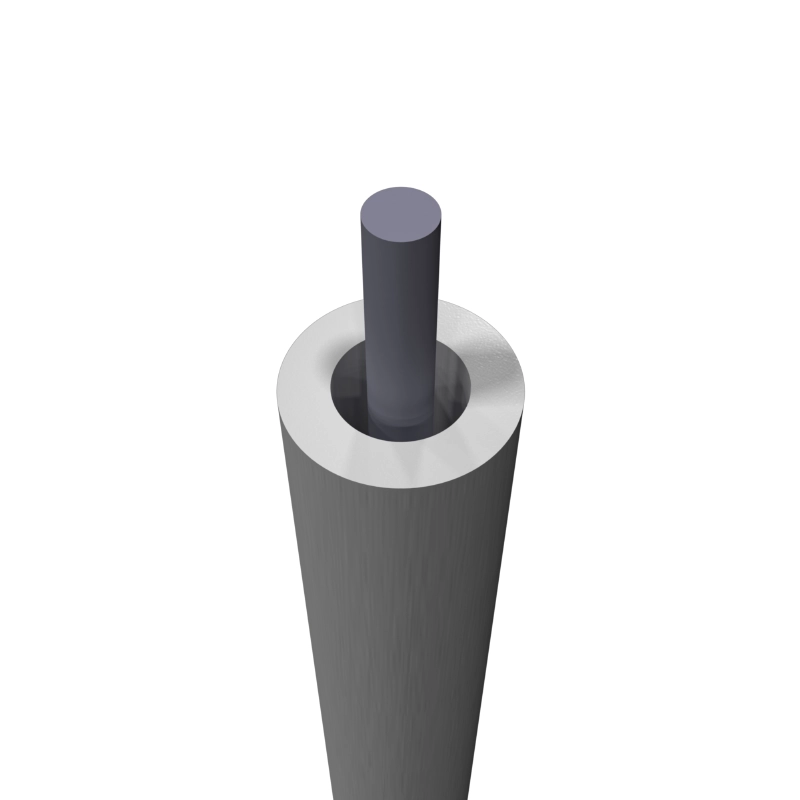
A cross-section revealing the durable steel core and protective outer PVC casing, engineered to prevent scratches on high-value coated glass.
Absorbing the Shock: Industrial Rubber Buffers and High-Wear Base Materials
When an operator loads a heavy sheet of laminated glass, the initial impact is concentrated on the base and the backrest. This is where material durability is tested not by abrasion, but by repeated, high-force impact.
The Problem (Before): Inferior rubber stops can harden and crack, losing their ability to absorb shock. This transfers impact forces directly to the glass edge, a primary cause of hidden micro-cracks that can later lead to catastrophic failure during the tempering process or after installation. Similarly, low-grade plastic or wooden bases can chip or splinter, creating an uneven and dangerous support surface.
The Engineering Solution (Why it Works): The glass harp rack is equipped with Industrial Rubber Buffer Strips at all key impact zones. This material is designed to maintain its durometer (hardness) and flexibility over thousands of loading cycles, effectively dampening the kinetic energy. At the base, you have two robust options: high-wear Nylon rollers that allow heavy lites to glide into place with minimal force, or a full base of slotted High-Density Polyethylene (HDPE). Both materials are renowned for their exceptional impact resistance and low-friction surfaces, ensuring a stable and safe foundation for every piece of glass, from a standard 6mm lite to a 1-inch thick laminated panel.

The industrial rubber buffer strip absorbs loading impact, protecting glass edges from the shock that causes micro-cracks.
The Unseen Contributor: How a Rigid Frame Protects the Padding
Padding durability isn’t just about the material itself. It’s also about the stability of the structure it’s mounted on.
The Problem (Before): A rack frame that flexes or twists under a heavy, dynamic load (like being moved across an uneven workshop floor) puts immense shearing and torsional stress on its padding. This constant micro-movement accelerates wear and tear, causing padding to delaminate from its core or tear at the mounting points.
The Engineering Solution (Why it Works): The entire harp rack for glass is constructed from heavy-gauge Q235A Carbon Steel, utilizing a full welding process for maximum structural integrity. This creates an incredibly rigid, non-flexing chassis. By eliminating frame distortion, we ensure that the protective materials are only subjected to the forces they were designed for—direct compression and cushioning. This structural stability is a critical, often overlooked factor that dramatically extends the service life of every PVC sleeve and rubber buffer on the unit.

The robust, fully-welded Q235A steel frame provides the rigidity needed to prevent flexing, which in turn protects padding materials from premature wear.
The Result: Lower Remake Rates and a Higher-Quality Output
Investing in a harp rack glass trolley with durable, well-engineered padding materials isn’t an expense; it’s a direct investment in your production quality and efficiency.
The Outcome (After): With padding that resists wear, impact, and chemical degradation, your team can move glass between the cutting, edging, and washing stations with confidence. The incidence of last-minute scratches and edge chips plummets, directly reducing your scrap rate and the associated costs of material, labor, and energy for remakes. Your workflow becomes smoother, your product quality more consistent, and your operational profitability improves. That is the tangible return on investment from focusing on the long-term durability of every component, down to the last inch of padding.

Multiple racks in a busy production environment demonstrate the reliability and efficiency gained from durable, long-lasting components.
Frequently Asked Questions
1. How does the PVC padding hold up to the chemicals used in a glass washing line?
The PVC casing is formulated to be highly resistant to the common detergents and de-ionized water used in industrial glass washing machines. It will not become brittle or sticky with incidental exposure, ensuring a long service life even when used to transport glass directly from the washer to the IGU assembly line.
2. Are the padding materials and rollers field-replaceable if damaged in a severe impact?
Yes. Although the materials are extremely durable, we understand that major accidents can happen in a busy facility. The divider rods, rubber buffers, and nylon rollers are designed as modular components that can be ordered and replaced in the field, maximizing the uptime and lifespan of your investment.
3. What is the durability difference between Nylon rollers and a solid HDPE slotted base?
Both are exceptionally durable. Nylon rollers are ideal for extremely heavy glass as they reduce the friction and effort needed to load the rack. They are highly resistant to wear and will not develop flat spots. The solid HDPE base offers continuous, uninterrupted support along the entire bottom edge of the glass, which is a superior solution for preventing sagging or stress points on very thin (e.g., < 6mm) or oddly shaped lites.
4. How does the frame’s powder coating contribute to the padding’s lifespan?
The electrostatic powder coating creates a hard, sealed surface on the steel frame. This prevents rust or corrosion from forming underneath the padding’s mounting points, which could otherwise cause the padding to lift, bubble, or separate from the frame over time, especially in humid environments.
5. Is the PVC padding material safe for direct contact with soft-coat Low-E glass?
Absolutely. The smooth, non-abrasive surface of the PVC casing is specifically chosen for its compatibility with the most sensitive coated glass, including soft-coat (sputtered) Low-E products. It provides the necessary cushioning without leaving residues or causing the microscopic scratches that can compromise the coating’s performance and appearance.
GET IN TOUCH
Please Don’t Hesitate If You Have Any Questions Or Special Requirements Fill In The Form Below!
Request a Factory-Direct Price Quote
Get customized CAD drawings, dynamic loading calculations, and wholesale price quotes. Response within 12 hours.