
 EN
 DE
 RU
 FR
 PT
 ES
 IT
 JA


A single scratch on a sheet of Low-E glass or a micro-crack that appears after tempering can wipe out the profit on an entire order. The problem often isn’t the operator or the furnace—it’s the unseen vibration and sharp edges on the non-compliant racks used for in-plant transfer. Precision in your process demands precision in your equipment.
Do harp racks glass industry meet GB/T1804-m standards?
Yes, our harp racks for the glass industry are manufactured in strict accordance with the GB/T1804-m general tolerance standard. However, this is more than a simple compliance checkbox. For a glass fabricator, this standard is a direct assurance of quality that translates into reduced product damage, improved workflow, and a safer shop floor. A rack that fails to meet these precise tolerances can introduce subtle, yet costly, defects into your production line.
The Hidden Costs of “Good Enough” Racks in Glass Fabrication
In the world of custom glass fabrication, where you handle everything from heavy laminated glass to delicate coated lites, a rack is not just storage—it’s a critical piece of processing equipment. A rack built without adherence to a standard like GB/T1804-m often has:
- Micro-Burrs and Sharp Edges: Resulting from imprecise cutting, these almost invisible flaws can easily scratch expensive Low-E coatings or decorative finishes during loading and unloading.
- Poor Weld Quality: Inconsistent or “spot” welding instead of a full welding process creates weak points. Under the dynamic load of a 1500 kg glass pack moving across the factory floor, these joints can flex or fail, causing catastrophic damage.
- Frame Misalignment: Even a slight twist in the frame means glass lites don’t sit perfectly vertical. During transport from the CNC cutting table to the tempering furnace, this causes constant vibration, leading to micro-cracks that are often only discovered after the costly tempering process is complete.

An engineering drawing specifying dimensions and tolerances, foundational to meeting GB/T1804-m.
How GB/T1804-m Compliance Directly Protects Your Glass Assets
Adhering to the GB/T1804-m standard requires a commitment to precision manufacturing from raw material to finished product. Here’s how our process ensures the rack you receive is an asset, not a liability:
1. Precision Down to the Millimeter with Laser Cutting
All structural components are cut using high-precision laser cutting technology. This guarantees that every slot, hole, and edge is perfectly dimensioned and, crucially, free of the burrs and sharp slag left by inferior methods. This means your glass lites slide into place without the risk of chipped edges or surface scratches.
2. Unyielding Strength from Q235A Steel and Full Welding
The frame of our harp rack glass trolley is constructed from high-tensile Q235A Carbon Steel. More importantly, we employ an industrial equipment full welding process on all critical joints. Unlike point welding, this creates a monolithic structure that resists torsion and flexing, ensuring the entire load remains stable and vibration-free during in-plant transfer, protecting the integrity of every single glass sheet.
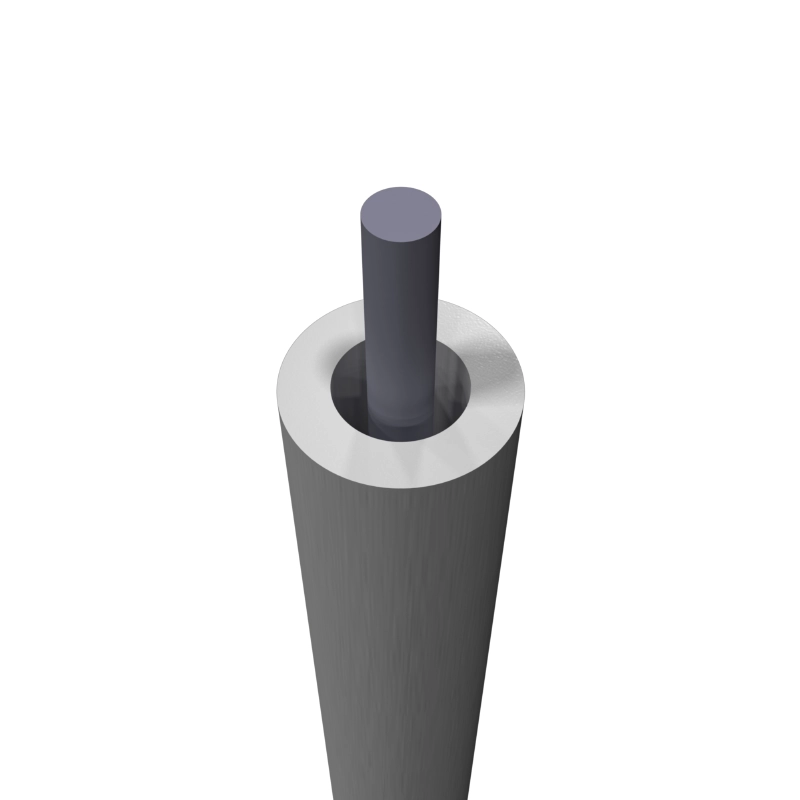
The composite structure of a PVC-coated steel divider, designed to provide strength without scratching glass surfaces.
3. Flawless Contact Surfaces for Delicate Materials
The standard mandates “surface clean without burrs,” which we take a step further. All dividers feature a robust steel core overmolded with a soft, durable PVC casing. This composite design provides the rigidity needed to separate heavy glass plates while offering a forgiving, non-abrasive surface that protects delicate coatings and freshly polished edges.
The Tangible ROI: From Compliance to Profitability
Investing in a harp rack built to GB/T1804-m standards delivers a clear and measurable return by transforming your Work-in-Progress (WIP) handling. Glass fabricators who upgrade their fleet experience:
- Drastically Reduced Spoilage Rates: By eliminating the primary mechanical causes of scratches, chips, and stress fractures, you increase your first-pass yield and reduce the costly labor and material waste of remakes.
- Optimized Workflow Between Stations: A reliable, stable harp rack for sorting glass units becomes a seamless link in your production chain. It allows operators to safely and efficiently move sorted lites for Insulated Glass Unit (IGU) assembly or stage full loads for the next process without bottlenecks.
- A Safer, More Confident Workforce: Operators can handle heavy and oversized glass with confidence, knowing the equipment is structurally sound and designed for stability. Features like our foot-actuated lifting mechanism lock the rack firmly in place, preventing movement during loading and enhancing operator safety.

Standards-compliant harp racks integrated into a busy glass production floor, ensuring safe and efficient WIP management.
Ultimately, a harp rack’s compliance with the GB/T1804-m standard is not about the rack itself—it’s about preserving the value and quality of the glass it carries. It is a foundational element for any modern glass fabrication facility serious about efficiency, quality, and safety.
Frequently Asked Questions (FAQ)
1. How does the GB/T1804-m tolerance standard specifically help when handling thin glass, like 6mm lites?
The standard’s precision is critical for thin glass. It ensures the slots and dividers are perfectly parallel and spaced. On a non-compliant rack, misaligned dividers can pinch or create uneven pressure points on thin glass, causing it to chip or fracture during transport. Our adherence to GB/T1804-m, combined with options for custom slot widths, provides the snug, uniform support thin glass needs to prevent vibration and damage.
2. Is the full welding process strong enough for the dynamic loads of moving heavy laminated or jumbo glass?
Absolutely. The full welding process, as opposed to simple tack or spot welding, creates a continuous, fused joint that is as strong as the parent Q235A steel. This ensures the entire frame acts as a single, rigid unit, capable of handling the significant dynamic stresses (starting, stopping, and rolling over uneven floors) of a fully loaded rack (up to 2500 kg on custom models) without flexing or fatigue failure.
3. Can the rack’s powder-coated finish withstand the chemicals used near a glass washing line?
Yes. Our standard electrostatic spraying (powder coating) process involves thorough pre-treatment, including sandblasting and rust removal, before the coating is applied and cured. This creates a hard, non-porous finish that is highly resistant to the moisture, detergents, and chemicals commonly found in a glass fabrication environment, preventing corrosion and extending the life of the rack.
4. What specific part of the GB/T1804-m standard prevents scratches on expensive Low-E coatings?
The key provision is the requirement for all edges to be free of burrs (“刃边角倒顿”). Our laser cutting process directly achieves this. A burr, even a microscopic one, on a metal divider or frame edge can act like a blade, easily scratching the delicate pyrolytic or sputtered coatings on Low-E glass. By ensuring every surface the glass could potentially touch is smooth and perfectly finished, we eliminate this risk.
5. How does the assembly precision, guided by the standard, impact the stability of the heavy-duty casters when fully loaded?
The standard ensures that the base frame is perfectly flat and the mounting plates for the casters are precisely positioned and aligned. If the frame were warped—a common issue with non-compliant manufacturing—the casters would not sit flush with the floor. This would cause uneven load distribution, with one or two wheels bearing excessive weight, leading to premature failure, instability, and a significant tipping hazard when maneuvering a heavy load.
GET IN TOUCH
Please Don’t Hesitate If You Have Any Questions Or Special Requirements Fill In The Form Below!
Request a Factory-Direct Price Quote
Get customized CAD drawings, dynamic loading calculations, and wholesale price quotes. Response within 12 hours.